250 couples Gaza Humanitarian Crisis Deepens as Heavy Rains and Mass Wedding Unfold
Heavy rains flood tens of thousands of tents in Gaza • A mass wedding ceremony brings together 250 couples • Organisers and officials share differing views on the unfolding humanitarian situation.
At a glance
- A mass wedding ceremony in Gaza brought together 250 couples to marry at the same time, organised by the UAE's humanitarian mission Operation Gallant Knight 3.
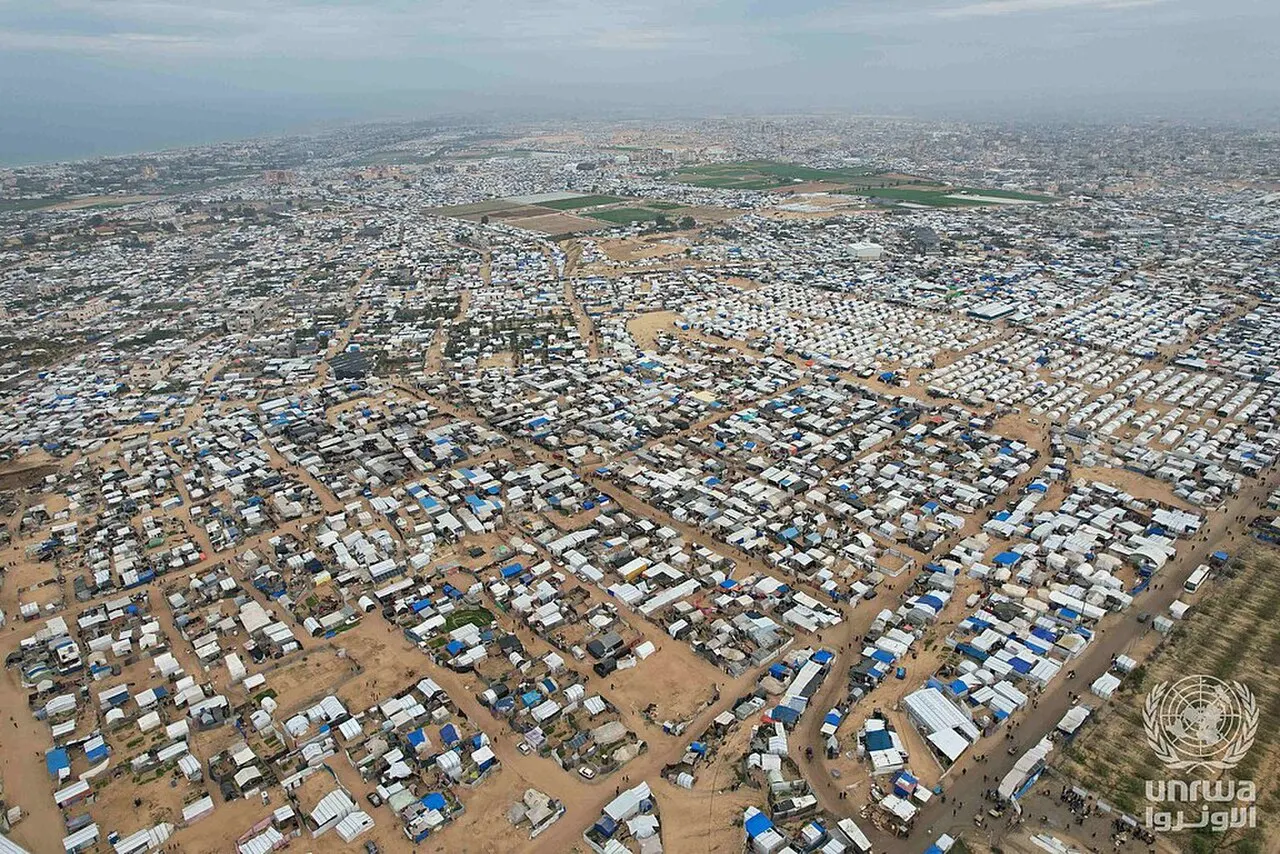
- Heavy rains swept across the Middle East, flooding tens of thousands of tents in Gaza's displaced persons' camps.
- A sand cliff collapsed onto tents sheltering displaced families in Gaza, killing at least five people including children.
Drafted with AI from named sources and checked automatically; published by our AI editor after passing every check. How briefs are made
- BBC World
- BBC Middle East
- Al Jazeera
- DW
The story
A mass wedding ceremony in Gaza brought together 250 couples to marry at the same time. The event was organised by the UAE's humanitarian mission Operation Gallant Knight 3. Meanwhile, heavy rains swept across the Middle East, flooding tens of thousands of tents in displaced persons' camps across Gaza.
Authorities in the enclave stated that at least 70,000 tents were flooded over the past day. A sand cliff also collapsed onto tents sheltering displaced families, killing at least five people including children. Around 1 million Palestinians live in camps that lack proper shelter, water, and sanitation, while more than 1.6 million residents live in tents or makeshift shelters out of a 2.1-million population.
Organisers of Operation Gallant Knight 3 described the event as bringing love and new beginnings to the besieged enclave. The Higher Presidential Committee for Church Affairs in Palestine said that heavy rainfall is compounding an already catastrophic humanitarian situation, leaving displaced families exposed to the elements. Israel stated that its army is acting in accordance with international law.
What each side says
Organisers
Organisers described the wedding initiative as bringing love and new beginnings to the besieged enclave.
Government of Palestine
“Heavy rainfall is compounding an already catastrophic humanitarian situation, leaving displaced families and those who have lost their homes exposed to the elements and deprived of the most basic necessities”The Higher Presidential Committee for Church Affairs in Palestine
Who is involved
Israel
Country in the Southern Levant region of West AsiaIn this storyIsrael stated that its army is acting in accordance with international law.
Gaza City
City in the Gaza Strip, PalestineIn this storyHeavy rains and flooding affected displaced persons in Gaza City4.
How we got here
- 2023-10-07The Gaza war was triggered by the Hamas-led attack on Israel, resulting in about 1,200 deaths and 251 hostages taken.
What the research says6 studies, 2011–2025
This literature review examines the academic research and historical documentation surrounding the humanitarian crisis in the Gaza Strip, providing context for the recent flooding of displacement tents and a mass wedding ceremony. By reviewing historical background, infrastructure studies, and public health literature, this survey outlines what was previously known about living conditions, health systems, and conflict dynamics in the region.
The review is organised into a chronological historical overview followed by thematic syntheses of infrastructure breakdown, public health challenges, and ongoing humanitarian pressures.
Historical Background and Blockade
The restrictions on movement and goods in the Gaza Strip trace back to the early 1990s during Israel's military occupation, as noted in the background history5. Following Hamas taking power in the year 2007, Israel intensified these movement restrictions and imposed a blockade on goods and people entering and leaving the territory, while Egypt concurrently closed the Rafah border crossing5.
According to the historical record, Israel's stated aims were to hold Hamas accountable for rocket attacks, constrain its governance, and pressure it to release an abducted Israeli soldier5. In an early political study, Butt and Butt (2016)6 documented that this prolonged blockade turned Gaza into a vast human cage where civilians faced severe violations of international humanitarian law, severe economic hardship, and destroyed infrastructure.
The military escalation on October 7th, 2023, subsequently triggered the wider Gaza war, resulting in approximately 1,200 deaths and 251 hostages taken, according to recent reporting7. Furthermore, subsequent military campaigns led to tens of thousands of deaths, while a ceasefire last year was followed by continuing daily airstrikes7.
Infrastructure Collapse and Life Support Systems
Academic literature extensively examines how physical infrastructure in Gaza has been utilized for spatial control. Salamanca (2011)8 explored how life-support systems—such as water, electricity, and sewage networks—function as geopolitical sites of spatial control and biopolitical tools following the 2005 disengagement. Expanding on this, background materials indicate that Israel tightened its blockade at the start of the war, causing significant shortages of fuel, food, medication, and water, alongside a 90 percent drop in electricity availability that shut down desalination plants and impacted sewage systems9.
Similarly, Shafi and Malik (2024)10 analysed the humanitarian crisis through the lens of international protection doctrines, arguing that global efforts to address the human catastrophe have been ineffective. 6 million residents live in tents or makeshift shelters, with approximately one million Palestinians residing in camps that lack proper shelter, water, and sanitation4.
Public Health, Hunger, and Human Needs
The collapse of infrastructure has severely impacted health and human survival in the enclave. Abuzerr et al. (2025)11 conducted a qualitative study highlighting how the healthcare system's collapse led to infectious disease spread, noting that doctors warned of disease outbreaks spreading due to overcrowded hospitals. This finding aligns with background reports detailing that healthcare collapse and ongoing famine form central components of the current crisis9.
Faris et al. (2025)12 utilized a population-based study to assess food security and hunger post-October 7th, quantifying vulnerabilities across the territory. Complementing these medical and quantitative assessments, Abed Alah (2024)13 examined the crisis through Maslow's hierarchy of needs, analysing how conflict disrupts the fulfillment of essential human needs. These studies collectively demonstrate how systemic instability and restricted aid delivery—compounded by civilian demonstrators blocking aid trucks at crossings like Kerem Shalom and Nitzana14—prevent basic rehabilitation efforts.
The reviewed literature does not yet provide comprehensive data on the long-term psychological impacts of mass displacement events, such as large-scale public ceremonies held inside displacement camps during active conflicts. While sources extensively document historical blockades and systemic infrastructure failures, specific empirical studies detailing the immediate logistical impacts of seasonal weather events, like heavy rains flooding tens of thousands of tents, remain limited in peer-reviewed journals. Furthermore, sources vary in their methodological approaches—ranging from qualitative interviews with healthcare workers to broad geopolitical analyses—leaving gaps in unified quantitative tracking of temporary shelter resilience across different municipal zones in Gaza.
Healthcare collapse and disease spread: a qualitative study of challenges in Gaza strip
Samer S. Abuzerr et al. · BMC Public HealthUpdate to an ongoing story. Follow this story over time: Gaza airstrikes and fires kill five people including a child — living research page →
Background
Sources and method
References (18)
News reports
- Gaza: Rains add misery to humanitarian catastrophe DW
- Gaza wedding festival sees 250 couples married at the same time BBC World
Studies
- Khalid Manzoor Butt and Anam Abid Butt (2016). Blockade on Gaza Strip: A Living Hell on Earth Journal of political studies
- Omar Jabary Salamanca (2011). Unplug and Play: Manufacturing Collapse in Gaza Human Geography
- Humaira Shafi and Hiba Malik (2024). Humanitarian Crisis and Crumbling Pillars of R2P in Gaza Journal of Security & Strategic Analyses
- Samer S. Abuzerr et al. (2025). Healthcare collapse and disease spread: a qualitative study of challenges in Gaza strip BMC Public Health
- MoezAlIslam E. Faris et al. (2025). Catastrophic famine in Gaza: Unprecedented levels of hunger post-October 7th. A real population-based study from the Gaza Strip PLoS ONE
- Muna Abed Alah (2024). Shattered hierarchy: how the Gaza conflict demolished Maslow’s pyramid of needs Current Psychology
Background
- Israel (Wikidata) Wikidata
- Israel Wikipedia
- Gaza City Wikipedia
- Blockade of the Gaza Strip Wikipedia
- Gaza humanitarian crisis Wikipedia
- Israeli direct action against aid delivery to Gaza Wikipedia
Reports used for this brief
How this brief was made
Automated research by ZynoNews: trending topic detected across news, searches and Wikipedia; facts and statements from the reports listed; numbers computed from open data; checked automatically for numbers, sources, copying and neutrality. Version 1. 4 news reports from 4 outlets, 0 official datasets, 6 research studies and 6 background sources.
Cite this
For papers, reports and theses. ZynoNews articles keep their address; updates are listed with their date.
ZynoNews Desk. (2026, November 13). Gaza Humanitarian Crisis Deepens as Heavy Rains and Mass Wedding Unfold. ZynoNews. https://zynonews.org/news/gaza-humanitarian-crisis-deepens-as-heavy-rains-and-mass-wedding-unfold-cd0633