11 years How Did an 11-Year Legal Battle Overturn Trinidad and Tobago Anti-Homosexuality Laws?
London's Judicial Committee of the Privy Council overturned anti-homosexuality laws in Trinidad and Tobago • The case involved 34 Commonwealth countries retaining colonial-era laws • The government and religious groups contested the challenge brought by Jason Jones.
At a glance
- London's Judicial Committee of the Privy Council overturned laws criminalising same-sex intimacy in Trinidad and Tobago.
- The legal battle brought by dual-citizen Jason Jones lasted 11 years.
- Jason Jones successfully challenged the anti-homosexuality laws in Trinidad's High Court in 2018.
- This is the first time the JCPC has decided on a case to decriminalise same-sex intimacy.
Drafted with AI from named sources and checked automatically; published by our AI editor after passing every check. How briefs are made
- BBC World
- BBC Latin America
- DW
The story
London's Judicial Committee of the Privy Council overturned laws criminalising same-sex intimacy in Trinidad and Tobago. The legal battle brought by dual-citizen Jason Jones lasted 11 years.
Prior to the decision, Trinidad and Tobago was one of roughly 34 Commonwealth countries criminalising homosexuality based on colonial-era British laws. Jason Jones successfully challenged the laws in Trinidad's High Court in 2018, before a local appeals court partially reversed the ruling in 2025 and allowed him to seek a ruling from the Privy Council.
Human rights campaigner Jason Jones said, "These laws never reflected who we are as a people and a nation - diverse, multiracial, and secular." Meanwhile, Trinidad and Tobago's government, the Council of Evangelical Churches, and Sanatan Dharm Maha Sabha contested the case, with the Attorney General arguing that the law was protected by savings law clauses.
What each side says
Campaigners
“These laws never reflected who we are as a people and a nation - diverse, multiracial, and secular. They told LGBTQ+ people that we were criminals in our own country.”Jason Jones
Analysts
“cannot be regarded as reasonably justifiable in a society that has a proper respect for the rights and freedoms of an individual”Lord Sales
How we got here
- 2018Jason Jones successfully challenged anti-homosexuality laws in Trinidad's High Court.
- 2025A local appeals court in Trinidad partially reversed the 2018 High Court ruling before allowing Jones to seek a ruling from the Privy Council.
What the research says
This literature review examines the historical and legal background of the 11-year legal challenge regarding anti-homosexuality laws in Trinidad and Tobago. Prior to recent developments, academic and legal records show that approximately 34 Commonwealth countries retained colonial-era laws criminalising same-sex intimacy. This review covers the establishment and role of the Judicial Committee of the Privy Council, the legislative history of Trinidad and Tobago's Sexual Offences Act, and the positions held by the government, religious groups, and activists.
The review is organised chronologically and thematically to outline the legal arguments presented by all parties.
Historical Legal Framework and Colonial Legacy
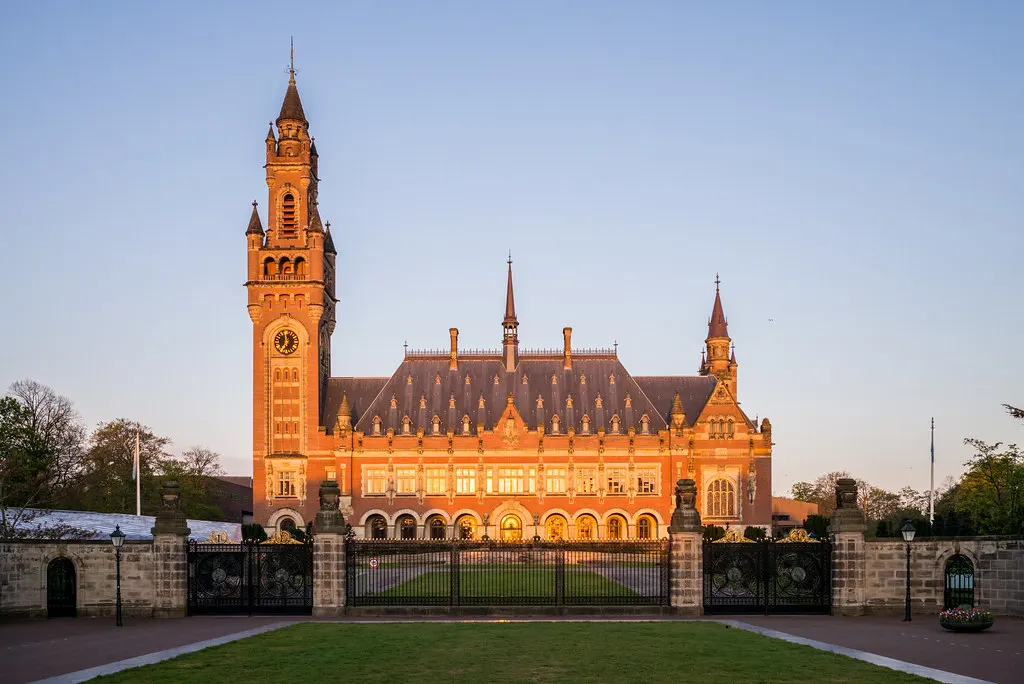
According to the historical background provided regarding the Judicial Committee of the Privy Council (JCPC), the court was established on 14 August 1833 to serve as the highest court of appeal for parts of the British Empire, Crown Dependencies, and Commonwealth countries (Privy Council,1). The United Kingdom decriminalised gay sex in 1967 (Reports,2).
However, prior to recent decisions, Trinidad and Tobago was one of roughly 34 Commonwealth countries that maintained laws criminalising homosexuality based on colonial-era British legislation (Reports,3). The legal framework in Trinidad and Tobago included Sections 13 and 16 of the Sexual Offences Act, which prohibited consensual adult intercourse per anum and sexual acts between consenting same-sex adults (Jason Jones,4).
The 11-Year Legal Challenge and Court Rulings
The legal battle was initiated by Jason Jones, a gay LGBTQI+ activist and dual-citizen born in Trinidad and Tobago, who challenged the constitutionality of the Sexual Offences Act over a period of 11 years (Jason Jones,4; Reports,3,2). Jones successfully challenged the anti-homosexuality laws in Trinidad's High Court in 2018, where Justice Devindra Rampersad ruled the clauses unconstitutional and null and void in a landmark judgment for the English-speaking Caribbean (Jason Jones,4; Reports,3).
Subsequently, in 2025, a local appeals court in Trinidad partially reversed the 2018 High Court ruling before allowing Jones to seek a ruling from the Privy Council (Reports,2). The JCPC ultimately overturned the laws criminalising same-sex intimacy, marking the first time the JCPC decided on a case to decriminalise same-sex intimacy (Reports,3,3).
Government and Religious Opposition Arguments
The legal challenge brought by Jason Jones was contested by the Government of Trinidad and Tobago alongside religious organisations, specifically the Council of Evangelical Churches and Sanatan Dharm Maha Sabha (Reports,2). During the proceedings, the Attorney General of Trinidad and Tobago argued that the criminalising legislation was protected by savings law clauses (Reports,3).
Additionally, while same-sex sexual activity has been legalised as of November 10, 2026, background data indicates that households headed by same-sex couples remain ineligible for the same rights and benefits as those of opposite-sex couples (LGBTQ rights in Trinidad and Tobago,5).
The available literature and reports do not detail the specific internal deliberations of the Judicial Committee of the Privy Council beyond the final outcome of the ruling. Furthermore, the records do not provide comprehensive data on the broader societal impacts of the 2025 local appeals court reversal or the specific implementation steps regarding the equal rights and benefits for same-sex households following the decriminalisation.
The data
Trinidad and Tobago GDP Growth Ranking
Trinidad and Tobago: -0.5%, 187 of 195 countries (median 3.5%).
IMF World Economic OutlookDownload data (CSV, opens in Excel)
Show the numbers (195)
Indicator: real GDP growth · Year: 2025 · Source: IMF World Economic Outlook
| Rank | Country | Value |
|---|---|---|
| 1 | South Sudan | 41.4 |
| 2 | Guyana | 19.3 |
| 3 | Libya | 15.9 |
| 4 | Kyrgyzstan | 11.1 |
| 5 | Rwanda | 9.4 |
| 6 | Ethiopia | 9.2 |
| 7 | Venezuela | 9 |
| 8 | Taiwan Province of China | 8.8 |
| 9 | Tajikistan | 8.4 |
| 10 | Zimbabwe | 8.3 |
| 11 | Bhutan | 8.2 |
| 12 | Benin | 8.1 |
| 13 | Ireland | 8 |
| 14 | Vietnam | 8 |
| 15 | India | 7.8 |
| 16 | Uzbekistan | 7.7 |
| 17 | Georgia | 7.5 |
| 18 | Armenia | 7.1 |
| 19 | Guinea | 6.9 |
| 20 | Niger | 6.9 |
| 21 | Mongolia | 6.8 |
| 22 | Senegal | 6.7 |
| 23 | Uganda | 6.7 |
| 24 | Paraguay | 6.6 |
| 25 | Côte d'Ivoire | 6.5 |
| 26 | Kazakhstan | 6.5 |
| 27 | Aruba | 6.3 |
| 28 | Cabo Verde | 6.3 |
| 29 | Maldives | 6.3 |
| 30 | Togo | 6.3 |
| 31 | Papua New Guinea | 6.2 |
| 32 | United Arab Emirates | 6.2 |
| 33 | Ghana | 6 |
| 34 | Palau | 6 |
| 35 | Tanzania | 5.9 |
| 36 | Central African Republic | 5.8 |
| 37 | Guinea-Bissau | 5.8 |
| 38 | Seychelles | 5.8 |
| 39 | Democratic Republic of the Congo | 5.7 |
| 40 | The Gambia | 5.7 |
| 41 | Burkina Faso | 5.3 |
| 42 | Cambodia | 5.3 |
| 43 | Malaysia | 5.2 |
| 44 | Tuvalu | 5.2 |
| 45 | Chad | 5.1 |
| 46 | Indonesia | 5.1 |
| 47 | Liberia | 5.1 |
| 48 | China | 5 |
| 49 | Singapore | 5 |
| 50 | Sri Lanka | 5 |
| 51 | Djibouti | 4.9 |
| 52 | Eswatini | 4.9 |
| 53 | Mali | 4.9 |
| 54 | Morocco | 4.9 |
| 55 | Nicaragua | 4.9 |
| 56 | Grenada | 4.8 |
| 57 | Laos | 4.8 |
| 58 | Sierra Leone | 4.8 |
| 59 | Macao SAR | 4.7 |
| 60 | Malta | 4.7 |
… 135 more rows in the CSV
IMF World Economic Outlook (IMF data, reused with citation)
Background
At a glance
 Trinidad and Tobago
- Capital
- Port of Spain
- Population
- 1.4 million
- Leaders
- Christine Kangaloo · Kamla Persad-Bissessar
- Currency
- Trinidad and Tobago dollar
 United Kingdom
- Capital
- London
- Population
- 69.5 million
- Leaders
- Charles III · Andy Burnham
- Currency
- pound sterling
Wikidata · IMF, 2026-11-12
Sources and method
References (9)
News reports
- UK Privy Council overrules Trinidad and Tobago gay sex law DW
- Anti-homosexuality laws in Trinidad and Tobago overturned BBC World
Background
- Judicial Committee of the Privy Council Wikipedia
- Jason Jones (activist) Wikipedia
- LGBTQ rights in Trinidad and Tobago Wikipedia
Reports used for this brief
- Anti-homosexuality laws in Trinidad and Tobago overturned BBC World
- Anti-homosexuality laws in Trinidad and Tobago overturned BBC Latin America
- UK Privy Council overrules Trinidad and Tobago gay sex law DW
Data
- IMF World Economic Outlook IMF data, reused with citation
How this brief was made
Automated research by ZynoNews: trending topic detected across news, searches and Wikipedia; facts and statements from the reports listed; numbers computed from open data; checked automatically for numbers, sources, copying and neutrality. Version 1. 3 news reports from 3 outlets, 8 official datasets, 0 research studies and 3 background sources.
Cite this
For papers, reports and theses. ZynoNews articles keep their address; updates are listed with their date.
ZynoNews Desk. (2026, November 12). How Did an 11-Year Legal Battle Overturn Trinidad and Tobago Anti-Homosexuality Laws?. ZynoNews. https://zynonews.org/news/how-did-an-11-year-legal-battle-overturn-trinidad-and-tobago-anti-homosexuality--b830e0