400,000 New Zealand Election Too Close to Call with 400,000 Special Votes Pending
New Zealand's general election remains undecided as parties await final counts • Nearly 400,000 special votes remain to be counted • Parties delay coalition talks following the close vote.
At a glance
- Nearly 400,000 special votes, representing 14% of total votes, remain to be counted.
- The election resulted in the loss of several senior National lawmakers, including finance, justice, and transport ministers.
- New Zealand political parties put off coalition talks following the close vote.
- Next: Official count confirmation by the Electoral Commission on Friday, November 27
Drafted with AI from named sources and checked automatically; published by our AI editor after passing every check. How briefs are made
- The Guardian World
- BBC Asia
- asia.nikkei.com
- nzherald.co.nz
- taz.de
The story
New Zealand's general election remains undecided as nearly 400,000 special votes, representing 14 percent of total votes, still need to be counted. Preliminary figures indicate a potential 130-seat parliament requiring 66 seats for a majority.
The close vote resulted in the loss of several senior National lawmakers, including Finance Minister Nicola Willis, Justice Minister Paul Goldsmith, Transport Minister Chris Bishop, and House Speaker Gerry Brownlee. Meanwhile, over 114,000 people migrated out of New Zealand in the year leading up to August amid economic stagnation.
Max Rashbrooke, an adjunct senior research fellow at the Victoria University of Wellington, stated that major parties on both sides of the political aisle were likely dissatisfied with their campaigns. Claire Timperley, a senior politics lecturer, stated that special votes tend to lean left because voters casting them are younger and more likely to be renters. The Electoral Commission expects to confirm the official count on Friday, November 27.
What each side says
Opportunity Party
“really need to be comfortable with the overall direction the government is going in”Qiulae Wong
Act Party
“The government barely survived, it must now put its best foot forward in every step”David Seymour
How we got here
- 2026-11-27Final election results expected from the Electoral Commission
- 2026-01-14Last day for Parliament to meet after the election
What the research says6 studies, 1998–2021
This literature review provides an overview of the historical, institutional, and electoral research relevant to New Zealand's parliamentary system and voting procedures. It examines the development of the legislature, the mechanics of mixed-member proportional representation, and the dynamics of coalition governance and political participation. By synthesizing foundational historical records and subsequent academic scholarship, this survey establishes the context for understanding contemporary electoral outcomes and governance structures.
The review is organized into sections covering institutional history, electoral system design, and the operational dynamics of coalition and caretaker governments.
Institutional History and Development
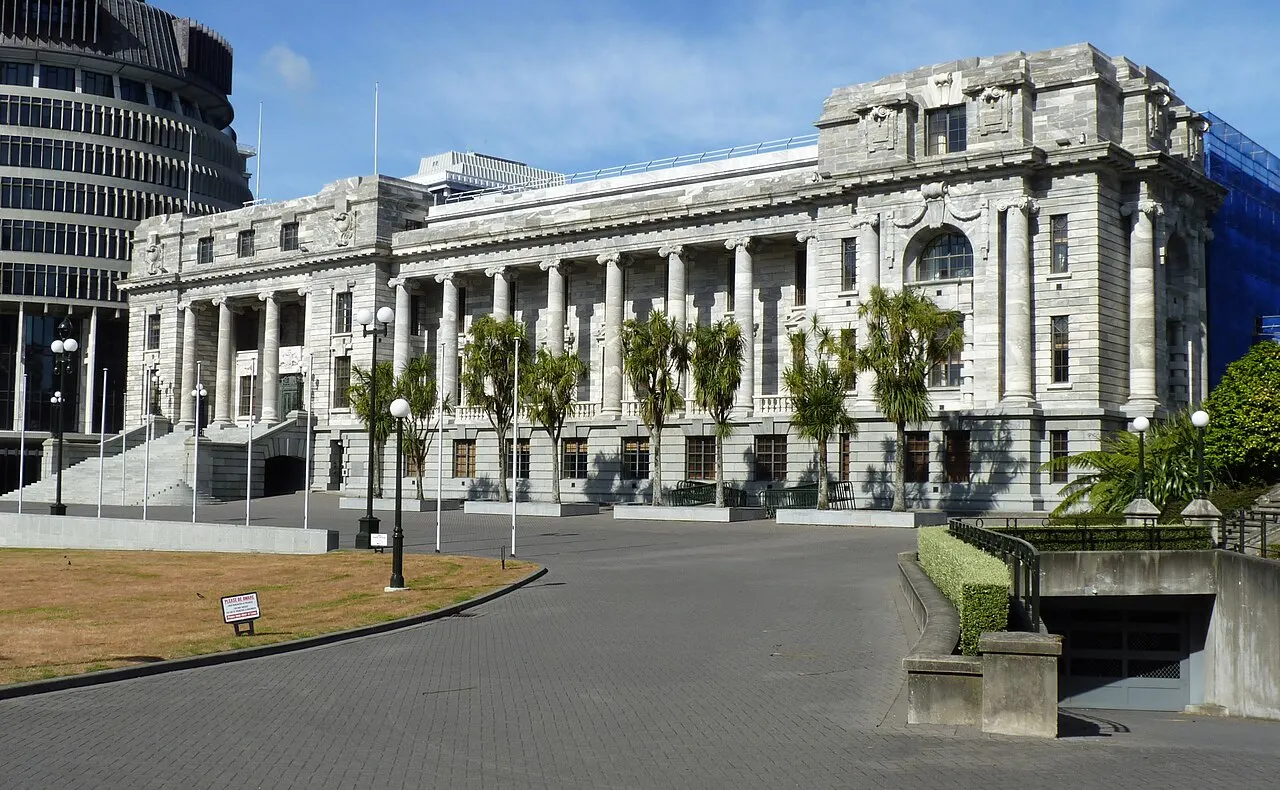
The New Zealand Parliament has a long-standing history as the unicameral legislature of the country, consisting of the monarch and the New Zealand House of Representatives, as detailed in the historical overview of the New Zealand Parliament1. Established in 1854, it ranks among the oldest continuously functioning legislatures globally1. Originally bicameral, it operated with a second chamber until the abolition of the New Zealand Legislative Council at the end of 19501.
The seat of Parliament has been located in the capital city of Wellington since 1865, and it has convened in its current building, Parliament House, since 19221. Building upon this institutional framework, Jonathan Boston et al. (1998)2 examined the evolution of caretaker conventions in New Zealand, noting that the need to clarify the role and responsibilities of caretaker governments gained added urgency following the 1993 referendum on electoral reform.
Electoral Reform and Representation
The transition to a new voting system significantly transformed the nation's political landscape. David Denemark, in a study compiled by Matthew Søberg Shugart and Martin P. Wattenberg (2003)3, explored the factors behind choosing mixed-member proportional representation (MMP) in New Zealand during the 1993 electoral reform. Takayuki Sakamoto (1999)4 further investigated the comparative origins of these electoral changes, noting that New Zealand, alongside Japan and Italy, reformed its electoral system in the early 1990s by combining single-member districts and proportional representation.
Sakamoto (1999)4 observed that while common symptoms of system failures set these reform movements in motion, country-specific factors such as popular referendums were necessary to force politicians to enact reform. Additionally, Matthew Søberg Shugart (2003)5 analyzed how certain electoral systems may be categorized as extreme on interparty or intraparty dimensions, affecting whether single parties form majority governments or require coalitions among several parties.
Political Participation and Coalition Governance
Scholars have also examined voter behavior and the mechanics of coalition administrations under the current framework. Shaun Francis Goldfinch et al. (2009)6, drawing on telephone interview surveys in Australia and New Zealand, identified a political participation divide, finding that individuals who participate in politics do so through various means, while those less likely to participate are stratified by education, ethnicity, income, gender, and age.
Regarding governance, the role of political parties within multi-party structures has been a subject of study. According to background data on New Zealand First7, the right-wing populist party founded and led by Winston Peters has participated in multiple coalition administrations, including supporting a Labour-led government through a confidence-and-supply agreement from 2005 to 2008 and serving in the Sixth National Government formed in November 20238,7.
Jakob Schwörer (2021)9 investigated populist parties in coalition governments across Western Europe and New Zealand, utilizing quantitative content analysis to explore how daily deliberation and compromises within coalitions influence such parties.
The current literature does not yet comprehensively show the direct psychological or behavioral impacts of delayed special vote counts on voter trust in contemporary New Zealand elections. Furthermore, while sources document the historical establishment of caretaker conventions and the general operation of mixed-member proportional representation, there remains a data gap regarding real-time quantitative analyses of how nearly 400,000 pending special votes quantitatively shift legislative seat projections in tightly contested post-election environments. Discrepancies also persist in the literature regarding the exact extent to which populist rhetoric is moderated inside diverse coalition arrangements.
Less Populist in Power? Online Communication of Populist Parties in Coalition Governments
Jakob Schwörer · Government and OppositionWhat to watch
- Official count confirmation by the Electoral Commission on Friday, November 27
- Parliament meeting by January 14
Update to an ongoing story. Follow this story over time: Who is winning the tight 2026 New Zealand general election? — living research page →
The data
Government Debt as Percentage of GDP
New Zealand: 54.7% in 2025 (+3.3 pts from 2024).
dashed = IMF forecastIMF World Economic OutlookDownload data (CSV, opens in Excel)
Show the numbers (31)
Country: New Zealand · Indicator: government debt (% of GDP) · Source: IMF World Economic Outlook
| Year | Value | Forecast |
|---|---|---|
| 2001 | 28.2 | no |
| 2002 | 26.4 | no |
| 2003 | 24.7 | no |
| 2004 | 22.5 | no |
| 2005 | 20.8 | no |
| 2006 | 18.4 | no |
| 2007 | 16.3 | no |
| 2008 | 19 | no |
| 2009 | 24.3 | no |
| 2010 | 29.6 | no |
| 2011 | 34.7 | no |
| 2012 | 35.7 | no |
| 2013 | 34.6 | no |
| 2014 | 34.2 | no |
| 2015 | 34.2 | no |
| 2016 | 33.4 | no |
| 2017 | 31.1 | no |
| 2018 | 28.1 | no |
| 2019 | 31.8 | no |
| 2020 | 43.2 | no |
| 2021 | 47.6 | no |
| 2022 | 46.9 | no |
| 2023 | 47.3 | no |
| 2024 | 51.4 | no |
| 2025 | 54.7 | no |
| 2026 | 57.1 | yes |
| 2027 | 58 | yes |
| 2028 | 57.8 | yes |
| 2029 | 57.1 | yes |
| 2030 | 56.3 | yes |
| 2031 | 55.4 | yes |
New Zealand Unemployment Rate
New Zealand: 5.3% in 2025 (+0.5 pts from 2024).
dashed = IMF forecastIMF World Economic OutlookDownload data (CSV, opens in Excel)
Show the numbers (31)
Country: New Zealand · Indicator: unemployment rate · Source: IMF World Economic Outlook
| Year | Value | Forecast |
|---|---|---|
| 2001 | 5.5 | no |
| 2002 | 5.3 | no |
| 2003 | 4.8 | no |
| 2004 | 4 | no |
| 2005 | 3.8 | no |
| 2006 | 3.9 | no |
| 2007 | 3.6 | no |
| 2008 | 4 | no |
| 2009 | 5.9 | no |
| 2010 | 6.2 | no |
| 2011 | 6.1 | no |
| 2012 | 6.5 | no |
| 2013 | 5.8 | no |
| 2014 | 5.4 | no |
| 2015 | 5.4 | no |
| 2016 | 5.2 | no |
| 2017 | 4.8 | no |
| 2018 | 4.3 | no |
| 2019 | 4.1 | no |
| 2020 | 4.6 | no |
| 2021 | 3.8 | no |
| 2022 | 3.3 | no |
| 2023 | 3.8 | no |
| 2024 | 4.8 | no |
| 2025 | 5.3 | no |
| 2026 | 5.4 | yes |
| 2027 | 5.1 | yes |
| 2028 | 4.5 | yes |
| 2029 | 4.3 | yes |
| 2030 | 4.4 | yes |
| 2031 | 4.3 | yes |
IMF World Economic Outlook (IMF data, reused with citation)
How the world is covering it
7 reports from 3 countries in 2 languages in the last three days.
Coverage data: GDELT Project
Background
At a glance
 New Zealand
- Capital
- Wellington
- Population
- 5.3 million
- Leaders
- Charles III · Christopher Luxon
- Currency
- New Zealand dollar
Wikidata · IMF, 2026-11-10
Sources and method
References (15)
Studies
- Jonathan Boston et al. (1998). Caretaker Government and the Evolution of Caretaker Conventions in New Zealand Victoria University of Wellington Law Review
- Matthew Søberg Shugart and MARTIN P. WATTENBERG (2003). Mixed-member electoral systems : the best of both worlds?
- Takayuki Sakamoto (1999). Explaining Electoral Reform Party Politics
- Matthew Søberg Shugart (2003). “Extreme” Electoral Systems and the Appeal of the Mixed‐Member Alternative Oxford University Press eBooks
- Shaun Francis Goldfinch et al. (2009). The Participation Divide? Political Participation, Trust in Government, and E‐government in Australia and New Zealand Australian Journal of Public Administration
- Jakob Schwörer (2021). Less Populist in Power? Online Communication of Populist Parties in Coalition Governments Government and Opposition
Background
- New Zealand Parliament Wikipedia
- New Zealand First Wikipedia
- Sixth National Government of New Zealand Wikipedia
Reports used for this brief
- New Zealand election coalition talks will likely take weeks – as it happened The Guardian World
- After knife-edge vote, New Zealand parties put off coalitions talks BBC Asia
- New Zealand knife - edge election puts coalition talks in focus asia.nikkei.com
- Election 2026 : Voting is over , what happens now ? nzherald.co.nz
- Parlamentswahl in Neuseeland : Vorübergehende Pattsituation taz.de
Data
- IMF World Economic Outlook IMF data, reused with citation
How this brief was made
Automated research by ZynoNews: trending topic detected across news, searches and Wikipedia; facts and statements from the reports listed; numbers computed from open data; checked automatically for numbers, sources, copying and neutrality. Version 1. 5 news reports from 5 outlets, 4 official datasets, 6 research studies and 3 background sources.
Cite this
For papers, reports and theses. ZynoNews articles keep their address; updates are listed with their date.
ZynoNews Desk. (2026, November 11). New Zealand Election Too Close to Call with 400,000 Special Votes Pending. ZynoNews. https://zynonews.org/news/new-zealand-election-too-close-to-call-with-400-000-special-votes-pending-de2697