90 United Kingdom and EU Border System Glitches Trap Travellers
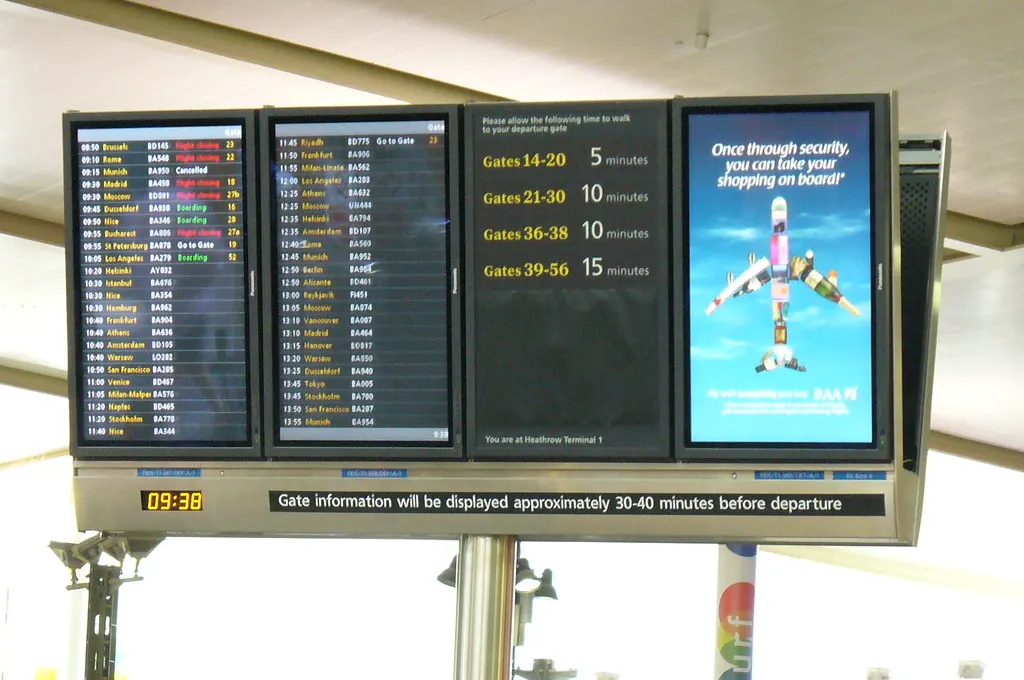
UK travellers face EU entry bans and deportations due to digital border system glitches • Post-Brexit rules limit travel to 90 days out of 180 with fines up to €10,000 • The EU is suing three firms over the system failures.
At a glance
- The EU launched its digital entry and exit system (EES) last year to replace passport stamps with biometric checks.
- Author Jojo Moyes was detained by French border guards after a holiday because her Portugal departure was not logged.
- The EU is suing three firms, including IBM and two European firms, over entry and exit border system failures.
- Next: Resolution of the European Commission engagement regarding EES record inaccuracies
Drafted with AI from named sources and checked automatically; published by our AI editor after passing every check. How briefs are made
- The Guardian World
The story
UK travellers face entry bans and deportation risks due to technical errors in the European Union's digital entry and exit system. Author Jojo Moyes was detained by French border guards after her departure from Portugal was not logged by the automated biometric checks.
Post-Brexit rules limit travellers to spending 90 days out of 180 in Europe, with violations risking deportation or fines up to €10,000. Jojo Moyes stated that a border control officer warned her not to attempt to re-enter Europe until the issue is resolved or face a €10,000 fine and a two-year ban. Jane Nolan stated that she and her husband travelled to France for 40 days and made no subsequent Schengen visits.
Consumer advocates and travel industry representatives argue that travellers should not be penalised for system failures. Rory Boland called the situation one of the most serious European border control failures, while Julia Lo Bue-Said called for greater accountability and a correction process. Meanwhile, a Foreign Office spokesperson stated that the UK government is raising the issues with the European Commission.
What each side says
UK Travellers
“The border control senior officer at Marseille warned me that I should not attempt to re-enter Europe until it is sorted out, or face a €10,000 fine and a two-year”Jojo Moyes
Consumer Advocates
“This is one of the most serious in a long line of European border control failures. The lack of care and accountability shown towards travellers... is utterly indefensible.”Rory Boland
What the research says1 studies, 2016–2016
This literature review examines the historical development and current technological framework of automated border control systems within the European Union, alongside recent reports regarding digital entry and exit tracking. As international travel regulations evolve following the withdrawal of the United Kingdom from the European Union, understanding the intersection of automated border technology and post-Brexit policy is crucial.
This review is organised into three sections, beginning with the historical implementation of border monitoring systems, followed by an analysis of automated verification technologies, and concluding with documented operational challenges and policy enforcement.
Historical Background of Border Systems
The operational framework governing European borders has undergone significant structural changes over time. According to Wikipedia's history of the Entry/Exit System1, the Entry/Exit System is an automated electronic monitoring system operated by eu-LISA to record border crossings of third-country nationals at Schengen Area checkpoints, having become operational on 10 April 2026 to replace traditional passport stamps.
Prior to these developments, the United Kingdom maintained its own border infrastructure, where the UK Border Agency operated as the executive border control agency of the government from April 2008 until it was superseded in April 2013, as detailed in Wikipedia's history of the UK Border Agency2. Furthermore, Wikipedia's history of Brexit3 documents the broader political context of the withdrawal of the United Kingdom from the European Union, which established new regulatory parameters for travellers moving between the two regions.
Automated Border Control Technologies
The technological mechanisms facilitating modern border checks have been the subject of prior technical research and system deployment. Sanchez del Rio et al. (2016)4 examined automated border control systems, or eGates, noting that these self-service barriers utilise biometric data stored in microchips, alongside photographs or fingerprints, to verify passenger identities through facial, iris, or fingerprint recognition.
This research highlighted that facial recognition is considered the most acceptable modality by travellers and was integrated into second-generation passports to manage growing passenger numbers and airport congestion4. Complementing these technical frameworks, recent reports indicate that the European Union's digital entry and exit system was launched to replace manual passport stamps with automated biometric checks5.
However, the European Union has initiated legal actions against three firms, including IBM and two European companies, over entry and exit border system failures5.
Operational Errors and Travel Restrictions
Recent documentation highlights the intersection of automated tracking errors and post-Brexit travel limitations. According to recent reports5, post-Brexit rules restrict travellers from spending more than 90 days out of 180 in Europe, with violations carrying risks of deportation or fines up to 10,000 euros. Operational failures within the digital tracking infrastructure have been documented in several individual cases.
For instance, author Jojo Moyes was detained by French border guards and accused of overstaying because her departure from Portugal was not logged by the system5. Similarly, Jane Nolan and her husband discovered that the digital entry and exit system incorrectly indicated zero remaining travel days, which prevented them from booking a trip to France5.
Additionally, another UK holidaymaker was detained at the Italian border and deported under police guard after a system error incorrectly indicated an overstay5.
The available literature and reports do not yet provide a comprehensive statistical analysis of the total frequency of system glitches across all Schengen Area checkpoints, nor do they detail the specific technical root causes of the software failures attributed to the firms currently facing legal action by the European Union. Furthermore, there is a lack of comparative data regarding whether specific demographic groups or entry points experience higher rates of automated tracking errors, and the long-term systemic impacts on cross-border mobility remain unquantified in current empirical studies.
Automated border control e-gates and facial recognition systems
Jose Sanchez del Rio et al. · Computers & SecurityWhat to watch
- Resolution of the European Commission engagement regarding EES record inaccuracies
- Legal proceedings by the EU against IBM and two European firms over border system failures
The data
United Kingdom Real GDP Growth Ranking
United Kingdom: 1.2%, 161 of 195 countries (median 3.5%).
IMF World Economic OutlookDownload data (CSV, opens in Excel)
Show the numbers (195)
Indicator: real GDP growth · Year: 2025 · Source: IMF World Economic Outlook
| Rank | Country | Value |
|---|---|---|
| 1 | South Sudan | 41.4 |
| 2 | Guyana | 19.3 |
| 3 | Libya | 15.9 |
| 4 | Kyrgyzstan | 11.1 |
| 5 | Rwanda | 9.4 |
| 6 | Ethiopia | 9.2 |
| 7 | Venezuela | 9 |
| 8 | Taiwan Province of China | 8.8 |
| 9 | Tajikistan | 8.4 |
| 10 | Zimbabwe | 8.3 |
| 11 | Bhutan | 8.2 |
| 12 | Benin | 8.1 |
| 13 | Ireland | 8 |
| 14 | Vietnam | 8 |
| 15 | India | 7.8 |
| 16 | Uzbekistan | 7.7 |
| 17 | Georgia | 7.5 |
| 18 | Armenia | 7.1 |
| 19 | Guinea | 6.9 |
| 20 | Niger | 6.9 |
| 21 | Mongolia | 6.8 |
| 22 | Senegal | 6.7 |
| 23 | Uganda | 6.7 |
| 24 | Paraguay | 6.6 |
| 25 | Côte d'Ivoire | 6.5 |
| 26 | Kazakhstan | 6.5 |
| 27 | Aruba | 6.3 |
| 28 | Cabo Verde | 6.3 |
| 29 | Maldives | 6.3 |
| 30 | Togo | 6.3 |
| 31 | Papua New Guinea | 6.2 |
| 32 | United Arab Emirates | 6.2 |
| 33 | Ghana | 6 |
| 34 | Palau | 6 |
| 35 | Tanzania | 5.9 |
| 36 | Central African Republic | 5.8 |
| 37 | Guinea-Bissau | 5.8 |
| 38 | Seychelles | 5.8 |
| 39 | Democratic Republic of the Congo | 5.7 |
| 40 | The Gambia | 5.7 |
| 41 | Burkina Faso | 5.3 |
| 42 | Cambodia | 5.3 |
| 43 | Malaysia | 5.2 |
| 44 | Tuvalu | 5.2 |
| 45 | Chad | 5.1 |
| 46 | Indonesia | 5.1 |
| 47 | Liberia | 5.1 |
| 48 | China | 5 |
| 49 | Singapore | 5 |
| 50 | Sri Lanka | 5 |
| 51 | Djibouti | 4.9 |
| 52 | Eswatini | 4.9 |
| 53 | Mali | 4.9 |
| 54 | Morocco | 4.9 |
| 55 | Nicaragua | 4.9 |
| 56 | Grenada | 4.8 |
| 57 | Laos | 4.8 |
| 58 | Sierra Leone | 4.8 |
| 59 | Macao SAR | 4.7 |
| 60 | Malta | 4.7 |
… 135 more rows in the CSV
United Kingdom Inflation Ranking
United Kingdom: 3.4%, 84 of 195 countries (median 3%).
IMF World Economic OutlookDownload data (CSV, opens in Excel)
Show the numbers (195)
Indicator: inflation · Year: 2025 · Source: IMF World Economic Outlook
| Rank | Country | Value |
|---|---|---|
| 1 | Venezuela | 252 |
| 2 | Sudan | 99.9 |
| 3 | South Sudan | 97.6 |
| 4 | Zimbabwe | 81.4 |
| 5 | Iran | 50.6 |
| 6 | Argentina | 41.9 |
| 7 | Türkiye | 34.9 |
| 8 | Burundi | 34 |
| 9 | Malawi | 28.4 |
| 10 | Haiti | 28.3 |
| 11 | Nigeria | 23 |
| 12 | Myanmar | 21.1 |
| 13 | Egypt | 20.4 |
| 14 | Angola | 20.2 |
| 15 | Yemen | 20.2 |
| 16 | Bolivia | 19.5 |
| 17 | Ethiopia | 16 |
| 18 | Lebanon | 14.6 |
| 19 | Ghana | 14.2 |
| 20 | Zambia | 13.9 |
| 21 | Ukraine | 12.7 |
| 22 | Kazakhstan | 11.4 |
| 23 | West Bank and Gaza | 10.5 |
| 24 | Bangladesh | 10 |
| 25 | Suriname | 9.2 |
| 26 | Uzbekistan | 8.8 |
| 27 | Russia | 8.7 |
| 28 | Mongolia | 8.6 |
| 29 | Liberia | 8.3 |
| 30 | Kyrgyzstan | 8.2 |
| 31 | Madagascar | 8 |
| 32 | The Gambia | 7.9 |
| 33 | Moldova | 7.8 |
| 34 | Laos | 7.7 |
| 35 | Sierra Leone | 7.6 |
| 36 | Democratic Republic of the Congo | 7.4 |
| 37 | Romania | 7.3 |
| 38 | Rwanda | 7 |
| 39 | Belarus | 6.6 |
| 40 | Naoero | 6.1 |
| 41 | Kiribati | 5.9 |
| 42 | Azerbaijan | 5.6 |
| 43 | Tunisia | 5.3 |
| 44 | Colombia | 5.1 |
| 45 | Brazil | 5 |
| 46 | Estonia | 4.8 |
| 47 | Uruguay | 4.7 |
| 48 | Honduras | 4.6 |
| 49 | Pakistan | 4.5 |
| 50 | Croatia | 4.4 |
| 51 | Hungary | 4.4 |
| 52 | Mozambique | 4.4 |
| 53 | Papua New Guinea | 4.4 |
| 54 | Chile | 4.2 |
| 55 | Slovakia | 4.2 |
| 56 | Iceland | 4.1 |
| 57 | Kenya | 4.1 |
| 58 | Marshall Islands | 4.1 |
| 59 | Nepal | 4.1 |
| 60 | North Macedonia | 4.1 |
… 135 more rows in the CSV
IMF World Economic Outlook (IMF data, reused with citation)
Background
At a glance
 United Kingdom
- Capital
- London
- Population
- 69.5 million
- Leaders
- Charles III · Andy Burnham
- Currency
- pound sterling
Wikidata · IMF, 2026-11-10
Sources and method
References (7)
News reports
- Author Jojo Moyes among UK travellers at risk of EU ban amid digital border system glitches The Guardian World
Studies
- Jose Sanchez del Rio et al. (2016). Automated border control e-gates and facial recognition systems Computers & Security
Background
- Entry/Exit System Wikipedia
- UK Border Agency Wikipedia
- Brexit Wikipedia
Reports used for this brief
- Author Jojo Moyes among UK travellers at risk of EU ban amid digital border system glitches The Guardian World
Data
- IMF World Economic Outlook IMF data, reused with citation
How this brief was made
Automated research by ZynoNews: trending topic detected across news, searches and Wikipedia; facts and statements from the reports listed; numbers computed from open data; checked automatically for numbers, sources, copying and neutrality. Version 1. 1 news reports from 1 outlets, 2 official datasets, 1 research studies and 3 background sources.
Cite this
For papers, reports and theses. ZynoNews articles keep their address; updates are listed with their date.
ZynoNews Desk. (2026, November 11). United Kingdom and EU Border System Glitches Trap Travellers. ZynoNews. https://zynonews.org/news/united-kingdom-and-eu-border-system-glitches-trap-travellers-8950dd