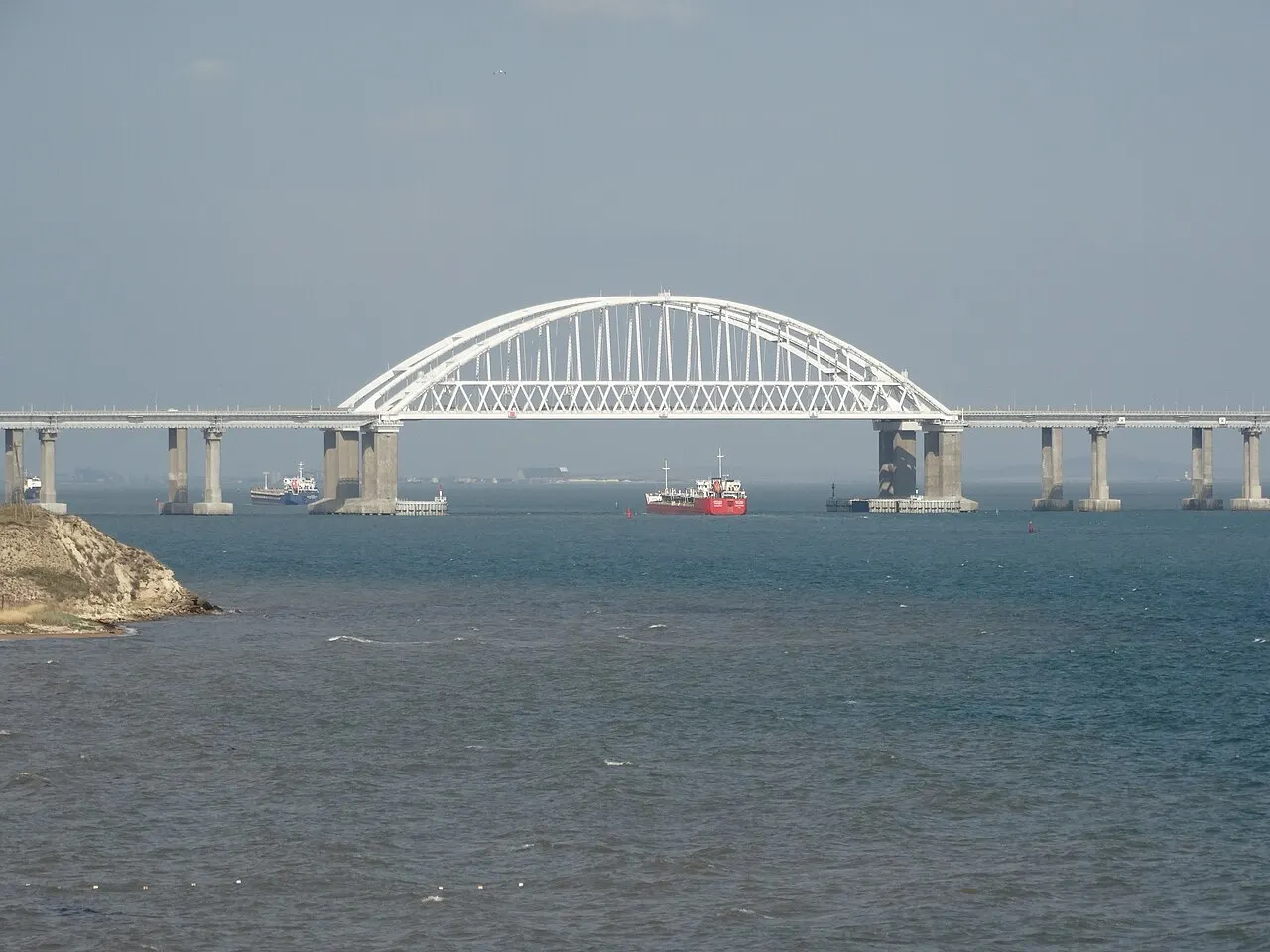
Was a Russian warship struck by a Ukrainian drone in the Gulf of Finland?
A Russian warship was reportedly struck by a Ukrainian drone in the Gulf of Finland • Norway joined Finland in barring Russian and Belarusian athletes • Officials and analysts weighed in on Baltic Sea safety.
At a glance
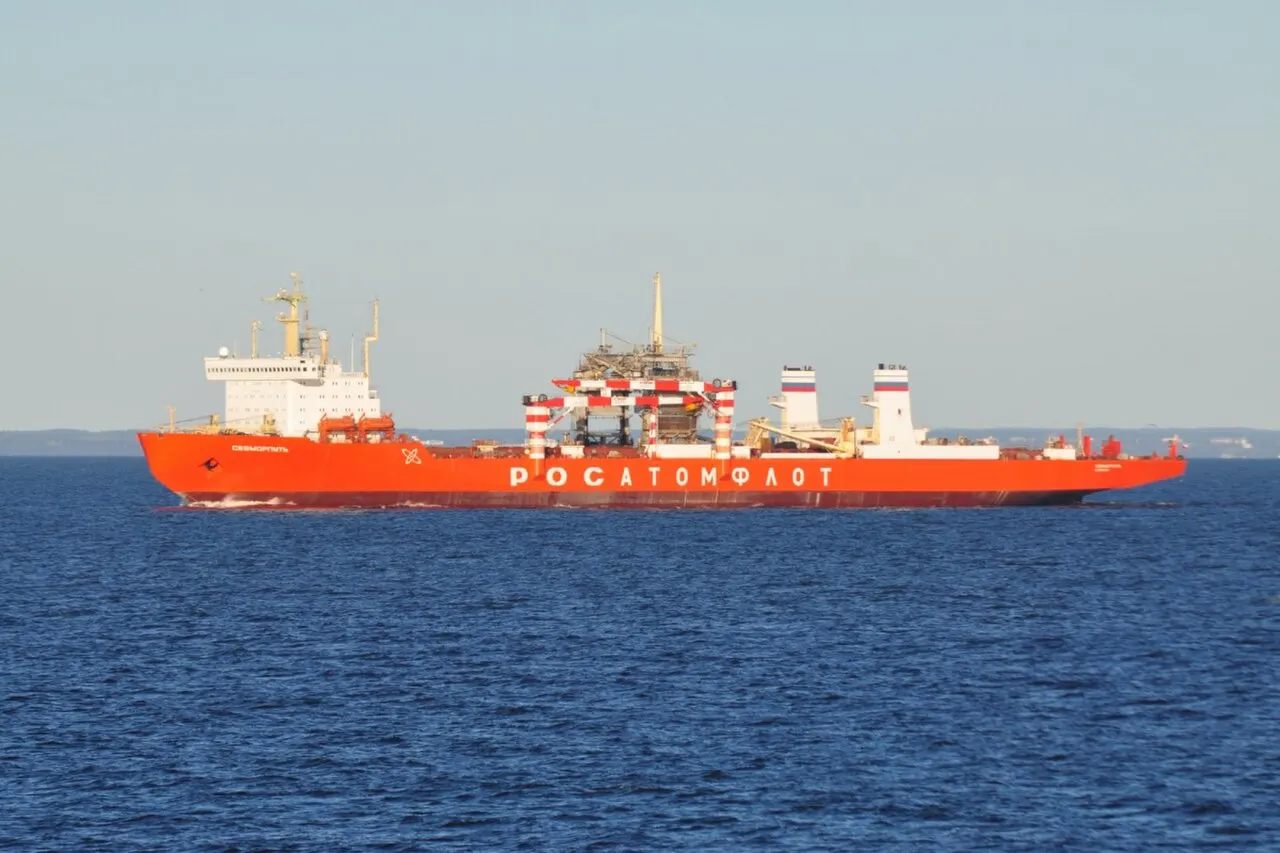
- A Russian warship was attacked by a Ukrainian drone in the Gulf of Finland on Wednesday.
- Ukraine's SBU targeted the ship Naro-Fominsk, a Buyan-M type small corvette carrying cruise missiles.
- Ukrainian drones also targeted Russia's Ust-Luga oil export depot on the Baltic coast overnight on Wednesday.
- Norway announced it would prevent Russian and Belarusian professional athletes from coming to Norway to compete.
- Next: Potential impacts of Norway and Finland's bans on Russian and Belarusian athletes entering the countries for sporting events.
Drafted with AI from named sources and checked automatically; published by our AI editor after passing every check. How briefs are made
- BBC World
- The Guardian World
The story
A Russian warship was attacked by a Ukrainian drone in the Gulf of Finland on Wednesday. Ukraine's SBU targeted the Naro-Fominsk, described as a Buyan-M type small corvette carrying Kalibr and Oniks cruise missiles. The ship is believed to have headed back to port in St Petersburg after the attack, and smoke was seen coming from the vessel.
The incident marked a new target area for Ukrainian drones, which also struck Russia's Ust-Luga oil export depot on the Baltic coast overnight on Wednesday. Military analyst Emil Kastehelmi noted that the Baltic Sea fleet had been untouched up to this point, while Estonia's Defence Minister Martin Herem and Finland's Foreign Minister Elina Valtonen offered contrasting assessments of regional stability.
Meanwhile, Norway announced it would prevent Russian and Belarusian professional athletes from coming to Norway to compete, following Finland's earlier decision to block visas for Russian athletes. Finnish Foreign Minister Elina Valtonen stated that as long as Russia's war of aggression continues, Russian athletes have no business in Finland.
What each side says
Government of Finland
“As long as Russia’s war of aggression continues, Russian athletes have no business in Finland”Elina Valtonen
Government of Estonia
“We know that smoke came from the ship afterwards. The ship itself went back towards St Petersburg.”Martin Herem
Who is involved
Elina Valtonen
Minister for Foreign Affairs of FinlandIn this storyElina Valtonen stated that the situation in the Baltic Sea remained stable and safe, and said that Russian athletes had no business in Finland as long as the war continued.
Martin Herem
General and Minister of Defence of EstoniaIn this storyMartin Herem said that smoke came from the ship afterwards and that the vessel went back towards St Petersburg3.
Astri Aas-Hansen
Minister of Justice and Public Security of NorwayIn this storyAstri Aas-Hansen announced that Norway would prevent Russian and Belarusian professional athletes from coming to Norway to compete5.
What the research says4 studies, 2015–2025
This literature review provides an overview of the existing research regarding maritime security, drone warfare, and geopolitical stability relevant to recent developments in the Baltic region. As academic interest grows around the tactical capabilities of uncrewed systems and maritime geo-strategies, scholars have examined how technological shifts impact regional security. This review outlines the historical context of maritime security strategies and synthesizes studies on drone technology in modern conflicts, structuring the discussion from foundational security frameworks to specific analyses of low-tech drone deployment and escalation risks.
Historical Foundations of Maritime Security
Academic inquiry into the geopolitical dimensions of maritime security has historically received limited attention from scholars, despite the growing volume of studies addressing various aspects of the maritime domain (Germond, 20156). Research in this area initially focused on clarifying the fundamental definitions of geopolitics and maritime security before evaluating practical examples of maritime security geo-strategies released by states and international institutions (Germond, 20156).
These institutional objectives and interests were shown to be directly and indirectly influenced by geographical factors (Germond, 20156). Building upon these baseline spatial and strategic considerations, subsequent security studies began to address how emerging military technologies interact with broader operational environments, setting the stage for more focused evaluations of uncrewed systems in contemporary conflict settings (Kunertova, 20237).
Evolution of Drone Warfare and Tactical Innovations
Scholars have increasingly examined the role of uncrewed systems in modern warfare, noting a prior myopia among security studies researchers regarding the tactical benefits and enabling functions of small drones (Kunertova, 20237). Early literature on the revolution in military affairs primarily examined emerging drone technologies through the lens of strategic advantages, large-scale platforms, and the ethical dimensions of counterterrorism strikes, while low-tech drone innovations received comparatively less attention (Kunertova, 20237).
This initial consensus suggested that large drones did not revolutionize warfare, as they proliferated slowly and remained costly and complex (Kunertova, 20237). More recent analyses have shifted focus toward the rapid proliferation of cheap, unsophisticated kamikaze drones, highlighting the legal, humanitarian, and operational challenges these cost-effective platforms present in modern conflict (Sotoudehfar et al., 20258).
Technological Proliferation and Escalation Risks
Beyond tactical deployment, researchers have investigated the systemic consequences of advanced and autonomous weapon systems on international stability. The rapid proliferation of artificial intelligence-augmented and enabled autonomous weapon systems, particularly drones utilized in swarming tactics, has been analyzed for its potential impact on deterrence, nuclear security, escalation, and strategic stability (Johnson, 20209). Iterations of autonomous weapon systems fused with artificial intelligence are projected to create a powerful interplay of increased range, accuracy, mass, coordination, intelligence, and speed in future conflicts (Johnson, 20209).
Concurrently, studies examining low-tech drone warfare emphasize that the reliance on crude, cost-effective drones heightens risks to civilian safety and increases the potential for violations of international humanitarian law due to the inherent shortcomings of the technology (Sotoudehfar et al., 20258).
The existing literature does not yet provide comprehensive empirical data on the immediate strategic outcomes of specific maritime drone strikes involving corvettes or regional infrastructure, such as the reported events in the Gulf of Finland and the Baltic coast (Reports [3], [3]). While current studies broadly address the tactical proliferation of low-tech drones and artificial intelligence-enabled swarming risks, there is a divergence in focus between macro-level geopolitical maritime strategies and micro-level analyses of humanitarian and legal outcomes. Furthermore, academic sources lack specific evaluations regarding the intersection of regional athletic bans, airspace incursions, and naval targeting within enclosed seas like the Baltic.
Cheap drones, costly consequences: the legal and humanitarian risks and outcomes of low-tech drone warfare
Saba Sotoudehfar et al. · Defense and Security AnalysisWhat to watch
- Potential impacts of Norway and Finland's bans on Russian and Belarusian athletes entering the countries for sporting events.
Update to an ongoing story. Follow this story over time: Do Russian Missile Strikes on Kyiv Threaten Upcoming Peace Talks? — living research page →
The data
Real GDP Growth in Finland
Finland: 0.8% in 2025 (-0.2 pts from 2024).
dashed = IMF forecastIMF World Economic OutlookDownload data (CSV, opens in Excel)
Show the numbers (31)
Country: Finland · Indicator: real GDP growth · Source: IMF World Economic Outlook
| Year | Value | Forecast |
|---|---|---|
| 2001 | 2.6 | no |
| 2002 | 1.7 | no |
| 2003 | 2 | no |
| 2004 | 4 | no |
| 2005 | 2.8 | no |
| 2006 | 4 | no |
| 2007 | 5.3 | no |
| 2008 | 0.8 | no |
| 2009 | -8.1 | no |
| 2010 | 3.2 | no |
| 2011 | 2.4 | no |
| 2012 | -1.5 | no |
| 2013 | -1 | no |
| 2014 | -0.5 | no |
| 2015 | 0.5 | no |
| 2016 | 2.6 | no |
| 2017 | 3.3 | no |
| 2018 | 1.2 | no |
| 2019 | 1.3 | no |
| 2020 | -2.5 | no |
| 2021 | 2.7 | no |
| 2022 | 0.6 | no |
| 2023 | -1.2 | no |
| 2024 | 1 | no |
| 2025 | 0.8 | no |
| 2026 | 1.7 | yes |
| 2027 | 1.4 | yes |
| 2028 | 1.2 | yes |
| 2029 | 1.2 | yes |
| 2030 | 1.2 | yes |
| 2031 | 1.2 | yes |
Russian Inflation Comparison
Russia: 8.7%, 27 of 195 countries (median 3%).
IMF World Economic OutlookDownload data (CSV, opens in Excel)
Show the numbers (195)
Indicator: inflation · Year: 2025 · Source: IMF World Economic Outlook
| Rank | Country | Value |
|---|---|---|
| 1 | Venezuela | 252 |
| 2 | Sudan | 99.9 |
| 3 | South Sudan | 97.6 |
| 4 | Zimbabwe | 81.4 |
| 5 | Iran | 50.6 |
| 6 | Argentina | 41.9 |
| 7 | Türkiye | 34.9 |
| 8 | Burundi | 34 |
| 9 | Malawi | 28.4 |
| 10 | Haiti | 28.3 |
| 11 | Nigeria | 23 |
| 12 | Myanmar | 21.1 |
| 13 | Egypt | 20.4 |
| 14 | Angola | 20.2 |
| 15 | Yemen | 20.2 |
| 16 | Bolivia | 19.5 |
| 17 | Ethiopia | 16 |
| 18 | Lebanon | 14.6 |
| 19 | Ghana | 14.2 |
| 20 | Zambia | 13.9 |
| 21 | Ukraine | 12.7 |
| 22 | Kazakhstan | 11.4 |
| 23 | West Bank and Gaza | 10.5 |
| 24 | Bangladesh | 10 |
| 25 | Suriname | 9.2 |
| 26 | Uzbekistan | 8.8 |
| 27 | Russia | 8.7 |
| 28 | Mongolia | 8.6 |
| 29 | Liberia | 8.3 |
| 30 | Kyrgyzstan | 8.2 |
| 31 | Madagascar | 8 |
| 32 | The Gambia | 7.9 |
| 33 | Moldova | 7.8 |
| 34 | Laos | 7.7 |
| 35 | Sierra Leone | 7.6 |
| 36 | Democratic Republic of the Congo | 7.4 |
| 37 | Romania | 7.3 |
| 38 | Rwanda | 7 |
| 39 | Belarus | 6.6 |
| 40 | Naoero | 6.1 |
| 41 | Kiribati | 5.9 |
| 42 | Azerbaijan | 5.6 |
| 43 | Tunisia | 5.3 |
| 44 | Colombia | 5.1 |
| 45 | Brazil | 5 |
| 46 | Estonia | 4.8 |
| 47 | Uruguay | 4.7 |
| 48 | Honduras | 4.6 |
| 49 | Pakistan | 4.5 |
| 50 | Croatia | 4.4 |
| 51 | Hungary | 4.4 |
| 52 | Mozambique | 4.4 |
| 53 | Papua New Guinea | 4.4 |
| 54 | Chile | 4.2 |
| 55 | Slovakia | 4.2 |
| 56 | Iceland | 4.1 |
| 57 | Kenya | 4.1 |
| 58 | Marshall Islands | 4.1 |
| 59 | Nepal | 4.1 |
| 60 | North Macedonia | 4.1 |
… 135 more rows in the CSV
IMF World Economic Outlook (IMF data, reused with citation)
Background
At a glance
 Russia
- Capital
- Moscow
- Population
- 144 million
- Leaders
- Vladimir Putin · Mikhail Mishustin
- Currency
- Russian ruble
 Ukraine
- Capital
- Kyiv
- Population
- 32.9 million
- Leaders
- Volodymyr Zelenskyy · Serhii Koretskyi
- Currency
- hryvnia
 Finland
- Capital
- Helsinki
- Population
- 5.6 million
- Leaders
- Alexander Stubb · Petteri Orpo
- Currency
- euro
Wikidata · IMF, 2026-11-13
Sources and method
References (12)
News reports
- Russian warship hit by Ukrainian drone in Gulf of Finland BBC World
- Norway follows Finland in barring Russian athletes from entering country over Ukraine war The Guardian World
Studies
- Basil Germond (2015). The geopolitical dimension of maritime security Marine Policy
- Dominika Kunertova (2023). Drones have boots: Learning from Russia’s war in Ukraine Contemporary Security Policy
- Saba Sotoudehfar et al. (2025). Cheap drones, costly consequences: the legal and humanitarian risks and outcomes of low-tech drone warfare Defense and Security Analysis
- James Samuel Johnson (2020). Artificial Intelligence, Drone Swarming and Escalation Risks in Future Warfare The RUSI Journal
Background
- Elina Valtonen Wikipedia
- Martin Herem Wikipedia
- Astri Aas-Hansen Wikipedia
Reports used for this brief
- Russian warship hit by Ukrainian drone in Gulf of Finland BBC World
- Norway follows Finland in barring Russian athletes from entering country over Ukraine war The Guardian World
Data
- IMF World Economic Outlook IMF data, reused with citation
How this brief was made
Automated research by ZynoNews: trending topic detected across news, searches and Wikipedia; facts and statements from the reports listed; numbers computed from open data; checked automatically for numbers, sources, copying and neutrality. Version 1. 2 news reports from 2 outlets, 12 official datasets, 4 research studies and 3 background sources.
Cite this
For papers, reports and theses. ZynoNews articles keep their address; updates are listed with their date.
ZynoNews Desk. (2026, November 13). Was a Russian warship struck by a Ukrainian drone in the Gulf of Finland?. ZynoNews. https://zynonews.org/news/was-a-russian-warship-struck-by-a-ukrainian-drone-in-the-gulf-of-finland-53a364