309 Why Is Germany Granting Intelligence Agencies New Powers Against Hybrid Threats?
The German parliament passed a major law giving intelligence agencies sweeping new powers to counter foreign threats • 309 MPs voted in favour, 190 against, and 71 abstained • The government calls it a necessary defense, while the opposition warns of a secret police.
At a glance
- The German parliament, the Bundestag, approved a major overhaul of legislation giving intelligence services greater powers.
- In the Bundestag vote on the new law, 309 MPs voted in favour, 190 voted against, and 71 abstained.
- An independent oversight board is to be established to monitor the intelligence agencies.
- In the first six months of 2026, crime originating from abroad rose by 24% compared to the same period the previous year.
- Next: Establishment of an independent oversight board to monitor the intelligence agencies.
Drafted with AI from named sources and checked automatically; published by our AI editor after passing every check. How briefs are made
- BBC World
- DW
The story
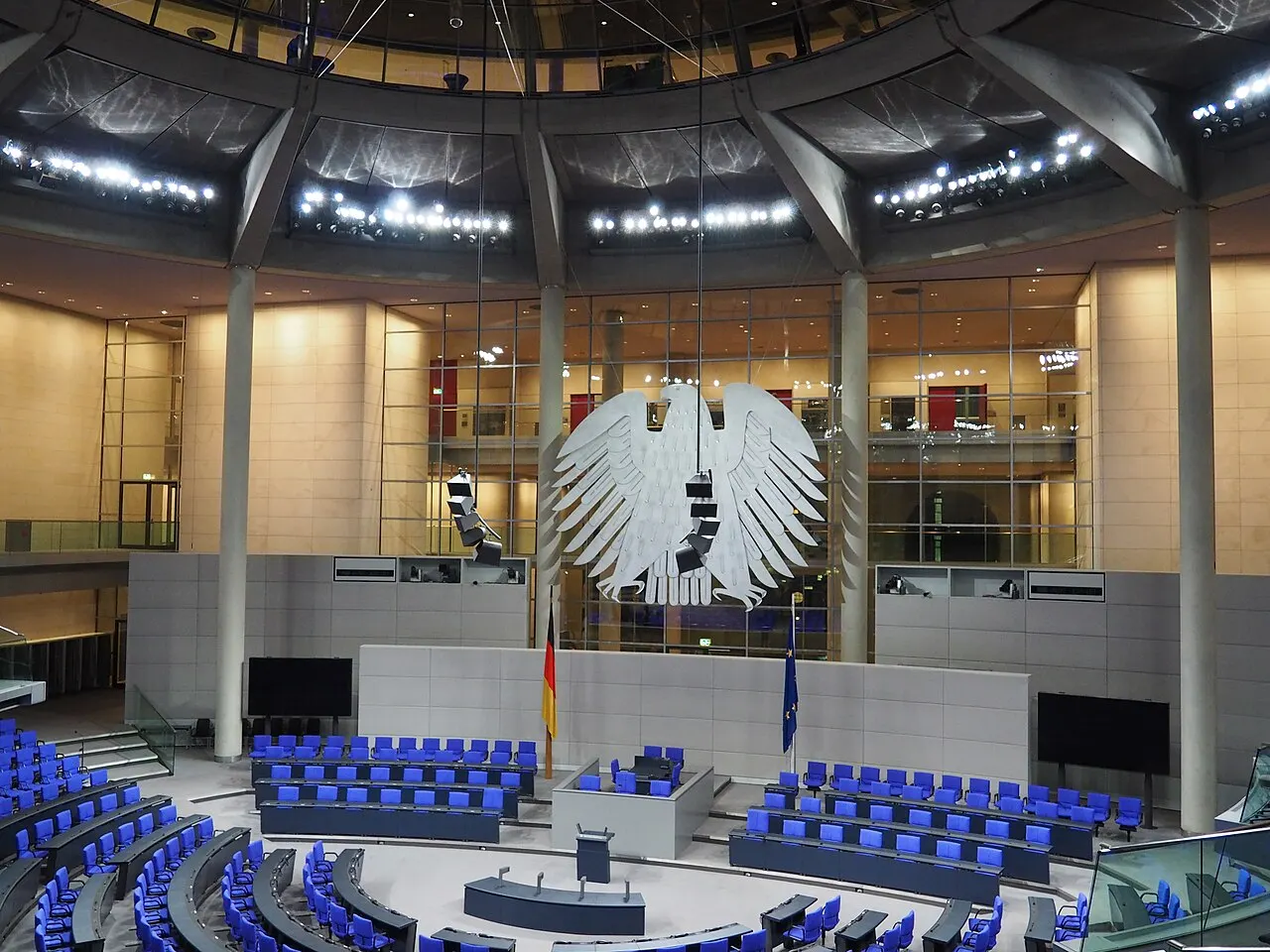
The German parliament approved a major legislative overhaul to give its intelligence services greater powers to tackle hybrid threats from abroad. In the Bundestag vote, 309 MPs voted in favour, 190 against, and 71 abstained.
Interior Minister Alexander Dobrindt called the legislation a reform of the century, noting that Germany is the target of hybrid threats, terrorism, extremism, and foreign powers. Federal Criminal Police Office President Holger Münch reported that crime originating from abroad rose by 24% in the first six months of 2026 compared to the previous year.
While Sonja Eichwede of the SPD argued the reforms would make democracy robust and resilient, opposition figures strongly disagreed. Clara Bünger from the Left Party described Interior Minister Dobrindt as creating a new German secret police, warning that the separation between the police and secret services is being eroded. An independent oversight board will be established to monitor the intelligence agencies.
What each side says
Government of Germany
“reform of the century”Alexander Dobrindt
Opposition in Germany
“a monster… summoning ghosts that we will probably never be able to get rid of”Clara Bünger (translated)
Should Germany grant intelligence agencies new executive powers to counter hybrid threats?
For yes: Reforms make democracy robust against hybrid threats and foreign powers.
For no: The separation between the police and secret service is being eroded.
Who is involved
Alexander Dobrindt
Federal Minister of the InteriorIn this storyAlexander Dobrindt called the new law a necessary defense, stating that Germany is the target of hybrid threats and foreign powers2.
Clara Bünger
Member of the Bundestag for The LeftIn this storyClara Bünger warned that the government was creating a secret police and eroding the separation between the police and the secret service2.
Holger Münch
Chief of the Federal Criminal Police OfficeIn this storyHolger Münch stated that hybrid attacks pose a new challenge to security organizations and are challenging the separation principle5.
How we got here
- 2026-08A drone carrying an explosive device was discovered at Leipzig Airport close to Ukrainian cargo planes.
- 2026-06BKA statistics showed crime originating from abroad rose by 24% in the first six months of the year.
What the research says6 studies, 2009–2021
This literature review examines the historical context and academic research surrounding state surveillance, intelligence agency powers, and hybrid warfare, providing a foundation for understanding recent legislative changes in the German parliament. The review covers the institutional framework of the German Bundestag, the evolution of hybrid threats and foreign interference, and the ongoing academic debate regarding state surveillance and civil liberties in Europe.
By synthesizing historical documents, theoretical definitions, and empirical studies, this overview aims to provide students and researchers with a clear mapping of the existing literature without drawing new conclusions.
Historical Foundations and Institutions
The institutional framework of German legislative power has historical roots established in the mid-twentieth century. According to Wikipedia's history of the Bundestag6, the Bundestag is the federal parliament of Germany and the only constitutional body directly elected by the German people, established by Title III of the Basic Law for the Federal Republic of Germany in 1949 as one of the country's legislative bodies alongside the Bundesrat.
Building upon this structural foundation, academic literature has increasingly focused on the evolution of state security measures. Early scholarship by David Murakami Wood and C. William R. Webster (2009)7 argued that surveillance was becoming increasingly normalised across Europe, altering the landscape of liberty and security through the normalisation of surveillance, the domestication of security, and the influence of the United Kingdom as a bad example.
Subsequent historical analysis by Ursula C. Schroeder and Fairlie Chappuis (2014)8 explored security sector reform, focusing on local agency and domestic power constellations to move beyond a state-centric approach in areas of limited statehood.
Conceptualizing Hybrid Warfare
Academic literature defines hybrid warfare through a variety of multidimensional threats and adversary tactics. According to Wikipedia's entry on hybrid warfare9, the term was defined by Frank Hoffman in 2007 as the simultaneous use of multiple types of warfare by flexible adversaries, combining political warfare, conventional methods, irregular warfare, and cyberwarfare with influencing methods like fake news, diplomacy, lawfare, regime change, and foreign electoral intervention to avoid attribution.
Expanding on these dynamics, Sascha‐Dominik Bachmann and Håkan Gunneriusson (2015)10 discussed hybrid war with the inclusion of cyber-terrorism and cyber-war against the backdrop of Russia's Ukrainian Spring and threats from radical Islamist groups. Similarly, Sandra Kalniete and Tomass Pildegovičs (2021)11 analyzed the European Union's resilience to hybrid threats, pointing to a shift in awareness driven by deteriorating EU-Russia relations, Russia's 2014 intervention in Ukraine, interference in the 2016 US presidential election, and repeated cyber-attacks and disinformation campaigns aimed at EU member states.
Additionally, background reports note that Russia has used hybrid warfare to foster instability in other countries while avoiding all-out war12.
State Surveillance and Human Rights
Research examining the intersection of state surveillance and fundamental rights highlights institutional responses to modern crises. Eleni Kosta (2020)13 explored the challenges algorithmic surveillance poses to human rights protection, examining the notion of agency under the European Convention on Human Rights and the insufficiency of traditional notification and redress safeguards. In a parallel study on crisis management, Kristine Eck and Sophia Hatz (2020)14 noted that the outbreak of the COVID-19 crisis ushered in a global rise in state surveillance, with governments in democracies and autocracies alike adopting contact tracing apps, censorship, and information manipulation to control communication flows.
These findings are complemented by recent institutional developments in Germany, where reports indicate that the Bundestag approved a major overhaul of legislation giving intelligence services greater powers2, including covert operations and sabotage for BND foreign intelligence agents2, protective actions and covert home entries for BfV domestic agents2, and the establishment of an independent oversight board5, following statistical data showing a 24% rise in crime originating from abroad in the first six months of 20265 and the discovery of an explosive-carrying drone at Leipzig Airport attributed by authorities to Russia2.
The reviewed literature does not yet provide a consensus on the exact constitutive elements or historical validity of hybrid warfare, with critics noting the concept remains vague. Furthermore, while existing studies address the normalisation of surveillance and algorithmic challenges to human rights, empirical data on the long-term efficacy and civil liberties impact of newly granted intelligence agency powers—such as those debated in Germany—remains limited. Disagreements persist among researchers regarding the appropriate balance between state security measures and traditional legal safeguards against secret surveillance.
Strengthening the EU’s resilience to hybrid threats
Sandra Kalniete and Tomass Pildegovičs · European ViewWhat to watch
- Establishment of an independent oversight board to monitor the intelligence agencies.
The data
Inflation in Germany
Germany: 2.3% in 2025 (-0.2 pts from 2024).
dashed = IMF forecastIMF World Economic OutlookDownload data (CSV, opens in Excel)
Show the numbers (31)
Country: Germany · Indicator: inflation · Source: IMF World Economic Outlook
| Year | Value | Forecast |
|---|---|---|
| 2001 | 1.9 | no |
| 2002 | 1.3 | no |
| 2003 | 1.1 | no |
| 2004 | 1.8 | no |
| 2005 | 1.9 | no |
| 2006 | 1.8 | no |
| 2007 | 2.3 | no |
| 2008 | 2.8 | no |
| 2009 | 0.2 | no |
| 2010 | 1.1 | no |
| 2011 | 2.5 | no |
| 2012 | 2.1 | no |
| 2013 | 1.6 | no |
| 2014 | 0.8 | no |
| 2015 | 0.7 | no |
| 2016 | 0.4 | no |
| 2017 | 1.7 | no |
| 2018 | 1.9 | no |
| 2019 | 1.4 | no |
| 2020 | 0.4 | no |
| 2021 | 3.2 | no |
| 2022 | 8.7 | no |
| 2023 | 6 | no |
| 2024 | 2.5 | no |
| 2025 | 2.3 | no |
| 2026 | 2.7 | yes |
| 2027 | 3.1 | yes |
| 2028 | 2 | yes |
| 2029 | 2.1 | yes |
| 2030 | 2.1 | yes |
| 2031 | 2.1 | yes |
Real GDP Growth Ranking, Germany
Germany: 0.2%, 181 of 195 countries (median 3.5%).
IMF World Economic OutlookDownload data (CSV, opens in Excel)
Show the numbers (195)
Indicator: real GDP growth · Year: 2025 · Source: IMF World Economic Outlook
| Rank | Country | Value |
|---|---|---|
| 1 | South Sudan | 41.4 |
| 2 | Guyana | 19.3 |
| 3 | Libya | 15.9 |
| 4 | Kyrgyzstan | 11.1 |
| 5 | Rwanda | 9.4 |
| 6 | Ethiopia | 9.2 |
| 7 | Venezuela | 9 |
| 8 | Taiwan Province of China | 8.8 |
| 9 | Tajikistan | 8.4 |
| 10 | Zimbabwe | 8.3 |
| 11 | Bhutan | 8.2 |
| 12 | Benin | 8.1 |
| 13 | Ireland | 8 |
| 14 | Vietnam | 8 |
| 15 | India | 7.8 |
| 16 | Uzbekistan | 7.7 |
| 17 | Georgia | 7.5 |
| 18 | Armenia | 7.1 |
| 19 | Guinea | 6.9 |
| 20 | Niger | 6.9 |
| 21 | Mongolia | 6.8 |
| 22 | Senegal | 6.7 |
| 23 | Uganda | 6.7 |
| 24 | Paraguay | 6.6 |
| 25 | Côte d'Ivoire | 6.5 |
| 26 | Kazakhstan | 6.5 |
| 27 | Aruba | 6.3 |
| 28 | Cabo Verde | 6.3 |
| 29 | Maldives | 6.3 |
| 30 | Togo | 6.3 |
| 31 | Papua New Guinea | 6.2 |
| 32 | United Arab Emirates | 6.2 |
| 33 | Ghana | 6 |
| 34 | Palau | 6 |
| 35 | Tanzania | 5.9 |
| 36 | Central African Republic | 5.8 |
| 37 | Guinea-Bissau | 5.8 |
| 38 | Seychelles | 5.8 |
| 39 | Democratic Republic of the Congo | 5.7 |
| 40 | The Gambia | 5.7 |
| 41 | Burkina Faso | 5.3 |
| 42 | Cambodia | 5.3 |
| 43 | Malaysia | 5.2 |
| 44 | Tuvalu | 5.2 |
| 45 | Chad | 5.1 |
| 46 | Indonesia | 5.1 |
| 47 | Liberia | 5.1 |
| 48 | China | 5 |
| 49 | Singapore | 5 |
| 50 | Sri Lanka | 5 |
| 51 | Djibouti | 4.9 |
| 52 | Eswatini | 4.9 |
| 53 | Mali | 4.9 |
| 54 | Morocco | 4.9 |
| 55 | Nicaragua | 4.9 |
| 56 | Grenada | 4.8 |
| 57 | Laos | 4.8 |
| 58 | Sierra Leone | 4.8 |
| 59 | Macao SAR | 4.7 |
| 60 | Malta | 4.7 |
… 135 more rows in the CSV
IMF World Economic Outlook (IMF data, reused with citation)
Sources and method
References (17)
News reports
- German spies handed new powers to tackle 'hybrid threats' from abroad BBC World
- Cyber attacks and hybrid warfare: Germany gives sweeping powers to its police and intelligence services DW
Studies
- David Murakami Wood and C. William R. Webster (2009). Living in Surveillance Societies: The Normalisation of Surveillance in Europe and the Threat of Britain’s Bad Example Journal of Contemporary European Research
- Ursula C. Schroeder and Fairlie Chappuis (2014). New Perspectives on Security Sector Reform: The Role of Local Agency and Domestic Politics International Peacekeeping
- Sascha‐Dominik Bachmann and Håkan Gunneriusson (2015). HYBRID WARS: THE 21st-CENTURY’S NEW THREATS TO GLOBAL PEACE AND SECURITY Scientia Militaria South African Journal of Military Studies
- Sandra Kalniete and Tomass Pildegovičs (2021). Strengthening the EU’s resilience to hybrid threats European View
- Eleni Kosta (2020). Algorithmic state surveillance: Challenging the notion of agency in human rights Regulation & Governance
- Kristine Eck and Sophia Hatz (2020). State surveillance and the COVID-19 crisis Journal of Human Rights
Background
- Alexander Dobrindt Wikipedia
- Clara Bünger Wikipedia
- Holger Münch Wikipedia
- Bundestag Wikipedia
- Hybrid warfare Wikipedia
- Russian hybrid warfare Wikipedia
Reports used for this brief
- German spies handed new powers to tackle 'hybrid threats' from abroad BBC World
- Cyber attacks and hybrid warfare: Germany gives sweeping powers to its police and intelligence services DW
Data
- IMF World Economic Outlook IMF data, reused with citation
How this brief was made
Automated research by ZynoNews: trending topic detected across news, searches and Wikipedia; facts and statements from the reports listed; numbers computed from open data; checked automatically for numbers, sources, copying and neutrality. Version 1. 2 news reports from 2 outlets, 6 official datasets, 6 research studies and 6 background sources.
Cite this
For papers, reports and theses. ZynoNews articles keep their address; updates are listed with their date.
ZynoNews Desk. (2026, November 14). Why Is Germany Granting Intelligence Agencies New Powers Against Hybrid Threats?. ZynoNews. https://zynonews.org/news/why-is-germany-granting-intelligence-agencies-new-powers-against-hybrid-threats-6d46f5