330,000 Yemen: Forces Retrench in Aden as Houthi Advances Spark Regional Shifts
Yemeni pro-government forces redeploy troops to Aden • Nearly 330,000 people displaced by escalating fighting • Saudi Arabia reshuffles military leadership of the coalition.
At a glance
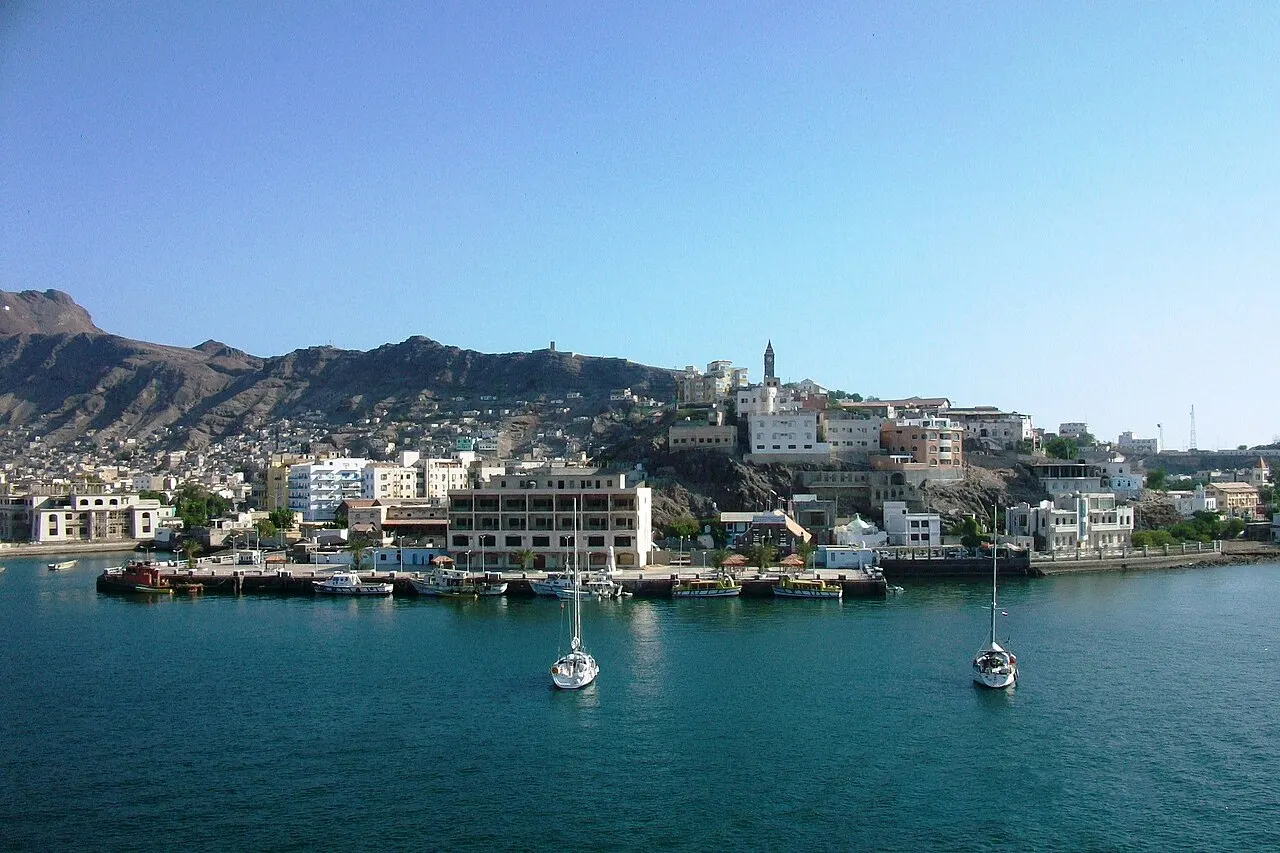
- Yemeni pro-government forces redeployed troops from the Bab al-Mandab area and Dhubab Airport to defend the interim capital, Aden.
- An Houthi assault on the presidential palace in Aden killed five people and injured 16.
- Saudi Arabia dismissed the commander of the coalition fighting in Yemen and appointed new military leadership.
- Next: Further territorial shifts and military developments near Aden
Drafted with AI from named sources and checked automatically; published by our AI editor after passing every check. How briefs are made
- BBC World
- BBC Middle East
- DW
- France 24
- Al Jazeera
The story
Yemeni pro-government forces redeployed troops from the Bab al-Mandab area and Dhubab Airport to defend the interim capital, Aden. Houthi fighters advanced to Khor Omairh, about 100km west of Aden, and reached 25km from government lines at Qawah.
The UN estimated that nearly 330,000 people have been displaced in Yemen due to escalating fighting. An Houthi assault on the presidential palace in Aden on October 15 killed five people and injured 16.
Pro-government forces said the step is driven by the priority of securing Aden and addressing existing threats. Houthi-run media stated that the movement took control of the territory evacuated by pro-government forces and posed no threat to international shipping while targeting vessels from Saudi Arabia.
What each side says
Government of Yemen
“This step is driven by the priority of securing the capital, Aden, and neighbouring governorates, reinforcing the front lines and addressing existing threats.”Pro-government forces / Southern Armed Forces
Houthis
Houthi-run media stated that the movement took control of evacuated territory and posed no threat to international shipping while targeting vessels from Saudi Arabia.
Who is involved
Houthis
Political and paramilitary organization in YemenIn this storyHouthi-run media stated that the movement took control of the territory evacuated by pro-government forces3.
How we got here
- 2014The civil war in Yemen began when the Houthis ousted the government from Sanaa.
- 2015A Saudi-led coalition intervened in Yemen following the Houthi ouster of the government.
What the research says5 studies, 2017–2021
This literature review provides an overview of the historical context and academic research surrounding the ongoing conflict in Yemen, focusing on the actors and dynamics relevant to recent events near Aden. By examining foundational historical accounts, civil war dynamics, and institutional challenges, this survey synthesizes what was known prior to the current reports of troop movements and territorial shifts.
The review is organized into sections covering the historical background of the crisis, the structural nature of the civil war and proxy dynamics, and the institutional and civil society challenges documented in recent scholarship.
Historical Background and Conflict Origins
The roots of the contemporary Yemeni crisis trace back to the 2011-2012 revolution against President Abdullah Saleh, who had led Yemen for 33 years, as outlined in Wikipedia's history of the Yemeni crisis4. Following Saleh's departure in early 2012 through a mediated agreement, the transition government led by Abdrabbuh Mansur Hadi faced significant political division and armed opposition from the Southern movement, Al-Qaeda in the Arabian Peninsula, and the Houthi militant movement, which had conducted a protracted insurgency in the north4.
According to Wikipedia's background on the Houthis2, the group officially known as Ansar Allah or Ansarullah emerged in the 1990s as a Zaydi revivalist and Shia Islamist political and paramilitary organization predominantly composed of Zaydis, with leadership largely drawn from the al-Houthi family. The broader multilateral civil war formally escalated in late 2014 when the Houthis ousted the government from Sanaa, prompting a Saudi-led coalition intervention in 20153.
This conflict involves the Rashad al-Alimi-led Presidential Leadership Council, recognized by the United Nations as the official government, and the Mahdi al-Mashat-led Houthi Supreme Political Council, with both sides claiming to constitute the official government of Yemen5.
The Nature of the Civil War and Proxy Dynamics
Academic scholarship on the conflict has extensively analyzed the multi-actor and external dimensions of the war. Karakır (2018)6 examined the high political instability and severe humanitarian crisis following the escalation in March 2015, evaluating whether the conflict should be characterized as a proxy war. The study noted a prevailing tendency in recent years to frame the Yemeni conflict through the lens of a religious struggle between Sunni Saudi Arabia and Shia Iran to reinforce regional control6.
This aligns with background reports noting that the Houthis are backed by Iran and widely considered part of the Iranian-led Axis of Resistance2. Furthermore, research by Walter (2017)7 analyzed the strategic advantages of radical and militant groups in civil wars across Muslim countries, observing that such groups frequently outlast and outperform more moderate counterparts under specific conditions of high competition and information dynamics.
Complementing these strategic assessments, Kivimäki (2021)8 explored the fragility-grievances-conflict triangle in the Middle East and North Africa, suggesting that the relationship between political legitimacy, state factionalism, and conflict requires a region-specific emphasis distinct from global patterns.
Civil Society, National Dialogues, and Peacebuilding
Beyond military and geopolitical analyses, researchers have investigated domestic peacebuilding efforts and the role of civil society organizations within Yemen's volatile environment. Elayah and Verkoren (2019)9 conducted an empirical analysis of civil society organizations in Yemen, finding that their potential for peacebuilding is severely restrained by the security situation, political capture, corruption, and complications associated with foreign support.
Their findings indicate that theoretical frameworks on civil society and peacebuilding must adapt to complex realities where boundaries between state and non-state, civil and uncivil, and domestic and international domains are blurred9. In a related study, Elayah et al. (2018)10 discussed the traditional use of national dialogues by Yemeni tribes to prevent clashes and how this tradition has been applied at the national level to avert civil wars.
They concluded that successful dispute resolution depends heavily on specific criteria, notably building an environment of trust before entering formal negotiations and ensuring local ownership of external interventions10.
While existing literature thoroughly documents the historical origins of the crisis, regional proxy dimensions, and institutional peacebuilding constraints, several empirical gaps remain. The reviewed studies do not yet provide granular, real-time data on the tactical military redeployments, specific territorial control shifts, or localized humanitarian displacement metrics occurring during recent flashpoints. Furthermore, sources differ on the precise weight of domestic grievances versus external regional interventions in driving conflict escalation, highlighting a need for further empirical research on micro-level conflict dynamics in contested transition zones.
The Fragility-Grievances-Conflict Triangle in the Middle East and North Africa (MENA): An Exploration of the Correlative Associations
Timo Kivimäki · Social SciencesWhat to watch
- Further territorial shifts and military developments near Aden
Update to an ongoing story. Follow this story over time: Why did the US order diplomats to leave Saudi Arabia? — living research page →
The data
Real GDP growth ranking for Yemen
Yemen: -0.5%, 188 of 195 countries (median 3.5%).
IMF World Economic OutlookDownload data (CSV, opens in Excel)
Show the numbers (195)
Indicator: real GDP growth · Year: 2025 · Source: IMF World Economic Outlook
| Rank | Country | Value |
|---|---|---|
| 1 | South Sudan | 41.4 |
| 2 | Guyana | 19.3 |
| 3 | Libya | 15.9 |
| 4 | Kyrgyzstan | 11.1 |
| 5 | Rwanda | 9.4 |
| 6 | Ethiopia | 9.2 |
| 7 | Venezuela | 9 |
| 8 | Taiwan Province of China | 8.8 |
| 9 | Tajikistan | 8.4 |
| 10 | Zimbabwe | 8.3 |
| 11 | Bhutan | 8.2 |
| 12 | Benin | 8.1 |
| 13 | Ireland | 8 |
| 14 | Vietnam | 8 |
| 15 | India | 7.8 |
| 16 | Uzbekistan | 7.7 |
| 17 | Georgia | 7.5 |
| 18 | Armenia | 7.1 |
| 19 | Guinea | 6.9 |
| 20 | Niger | 6.9 |
| 21 | Mongolia | 6.8 |
| 22 | Senegal | 6.7 |
| 23 | Uganda | 6.7 |
| 24 | Paraguay | 6.6 |
| 25 | Côte d'Ivoire | 6.5 |
| 26 | Kazakhstan | 6.5 |
| 27 | Aruba | 6.3 |
| 28 | Cabo Verde | 6.3 |
| 29 | Maldives | 6.3 |
| 30 | Togo | 6.3 |
| 31 | Papua New Guinea | 6.2 |
| 32 | United Arab Emirates | 6.2 |
| 33 | Ghana | 6 |
| 34 | Palau | 6 |
| 35 | Tanzania | 5.9 |
| 36 | Central African Republic | 5.8 |
| 37 | Guinea-Bissau | 5.8 |
| 38 | Seychelles | 5.8 |
| 39 | Democratic Republic of the Congo | 5.7 |
| 40 | The Gambia | 5.7 |
| 41 | Burkina Faso | 5.3 |
| 42 | Cambodia | 5.3 |
| 43 | Malaysia | 5.2 |
| 44 | Tuvalu | 5.2 |
| 45 | Chad | 5.1 |
| 46 | Indonesia | 5.1 |
| 47 | Liberia | 5.1 |
| 48 | China | 5 |
| 49 | Singapore | 5 |
| 50 | Sri Lanka | 5 |
| 51 | Djibouti | 4.9 |
| 52 | Eswatini | 4.9 |
| 53 | Mali | 4.9 |
| 54 | Morocco | 4.9 |
| 55 | Nicaragua | 4.9 |
| 56 | Grenada | 4.8 |
| 57 | Laos | 4.8 |
| 58 | Sierra Leone | 4.8 |
| 59 | Macao SAR | 4.7 |
| 60 | Malta | 4.7 |
… 135 more rows in the CSV
Inflation ranking for Yemen
Yemen: 20.2%, 15 of 195 countries (median 3%).
IMF World Economic OutlookDownload data (CSV, opens in Excel)
Show the numbers (195)
Indicator: inflation · Year: 2025 · Source: IMF World Economic Outlook
| Rank | Country | Value |
|---|---|---|
| 1 | Venezuela | 252 |
| 2 | Sudan | 99.9 |
| 3 | South Sudan | 97.6 |
| 4 | Zimbabwe | 81.4 |
| 5 | Iran | 50.6 |
| 6 | Argentina | 41.9 |
| 7 | Türkiye | 34.9 |
| 8 | Burundi | 34 |
| 9 | Malawi | 28.4 |
| 10 | Haiti | 28.3 |
| 11 | Nigeria | 23 |
| 12 | Myanmar | 21.1 |
| 13 | Egypt | 20.4 |
| 14 | Angola | 20.2 |
| 15 | Yemen | 20.2 |
| 16 | Bolivia | 19.5 |
| 17 | Ethiopia | 16 |
| 18 | Lebanon | 14.6 |
| 19 | Ghana | 14.2 |
| 20 | Zambia | 13.9 |
| 21 | Ukraine | 12.7 |
| 22 | Kazakhstan | 11.4 |
| 23 | West Bank and Gaza | 10.5 |
| 24 | Bangladesh | 10 |
| 25 | Suriname | 9.2 |
| 26 | Uzbekistan | 8.8 |
| 27 | Russia | 8.7 |
| 28 | Mongolia | 8.6 |
| 29 | Liberia | 8.3 |
| 30 | Kyrgyzstan | 8.2 |
| 31 | Madagascar | 8 |
| 32 | The Gambia | 7.9 |
| 33 | Moldova | 7.8 |
| 34 | Laos | 7.7 |
| 35 | Sierra Leone | 7.6 |
| 36 | Democratic Republic of the Congo | 7.4 |
| 37 | Romania | 7.3 |
| 38 | Rwanda | 7 |
| 39 | Belarus | 6.6 |
| 40 | Naoero | 6.1 |
| 41 | Kiribati | 5.9 |
| 42 | Azerbaijan | 5.6 |
| 43 | Tunisia | 5.3 |
| 44 | Colombia | 5.1 |
| 45 | Brazil | 5 |
| 46 | Estonia | 4.8 |
| 47 | Uruguay | 4.7 |
| 48 | Honduras | 4.6 |
| 49 | Pakistan | 4.5 |
| 50 | Croatia | 4.4 |
| 51 | Hungary | 4.4 |
| 52 | Mozambique | 4.4 |
| 53 | Papua New Guinea | 4.4 |
| 54 | Chile | 4.2 |
| 55 | Slovakia | 4.2 |
| 56 | Iceland | 4.1 |
| 57 | Kenya | 4.1 |
| 58 | Marshall Islands | 4.1 |
| 59 | Nepal | 4.1 |
| 60 | North Macedonia | 4.1 |
… 135 more rows in the CSV
IMF World Economic Outlook (IMF data, reused with citation)
Background
At a glance
 Yemen
- Capital
- Aden, Sanaa
- Population
- 18.8 million
- Leaders
- Rashad al-Alimi · Salem Saleh bin Braik
- Currency
- Yemeni rial
 Saudi Arabia
- Capital
- Riyadh
- Population
- 36 million
- Leaders
- Salman bin Abdulaziz Al Saud
- Currency
- Saudi riyal
Wikidata · IMF, 2026-11-16
Sources and method
References (16)
News reports
Studies
- İrem Aşkar Karakır (2018). ONGOING CONFLICT IN YEMEN: A PROXY WAR? TESAM Akademi Dergisi
- Barbara F. Walter (2017). The Extremist's Advantage in Civil Wars International Security
- Timo Kivimäki (2021). The Fragility-Grievances-Conflict Triangle in the Middle East and North Africa (MENA): An Exploration of the Correlative Associations Social Sciences
- Moosa Abdo Ali Elayah and Willemijn Verkoren (2019). Civil society during war: the case of Yemen Peacebuilding
- Moosa Abdo Ali Elayah et al. (2018). National dialogues as an interruption of civil war – the case of Yemen Peacebuilding
Background
- Houthis (Wikidata) Wikidata
- Houthis Wikipedia
- Yemeni crisis Wikipedia
- Yemeni civil war (2014–present) Wikipedia
Reports used for this brief
- Yemeni forces retreat to defend port city from Houthis BBC World
- Yemeni forces retreat to defend port city from Houthis BBC Middle East
- Yemen: Anti-Houthi forces pull back as rebels advance DW
- Saudi Arabia dismisses commander of anti-Houthi coalition as rebels advance France 24
- Houthis edge closer to Aden as Yemeni forces pull out of Bab al-Mandeb Al Jazeera
Data
- IMF World Economic Outlook IMF data, reused with citation
How this brief was made
Automated research by ZynoNews: trending topic detected across news, searches and Wikipedia; facts and statements from the reports listed; numbers computed from open data; checked automatically for numbers, sources, copying and neutrality. Version 1. 5 news reports from 5 outlets, 4 official datasets, 5 research studies and 4 background sources.
Cite this
For papers, reports and theses. ZynoNews articles keep their address; updates are listed with their date.
ZynoNews Desk. (2026, November 17). Yemen: Forces Retrench in Aden as Houthi Advances Spark Regional Shifts. ZynoNews. https://zynonews.org/news/yemen-forces-retrench-in-aden-as-houthi-advances-spark-regional-shifts-470f4d