40 Cape Canaveral: ULA Vulcan Rocket Fails Mid-Flight, Destroying 40 Amazon Satellites
A Vulcan rocket operated by United Launch Alliance failed mid-flight • All 40 Amazon Leo internet satellites aboard were destroyed • Amazon and ULA responded to the mission failure.
At a glance
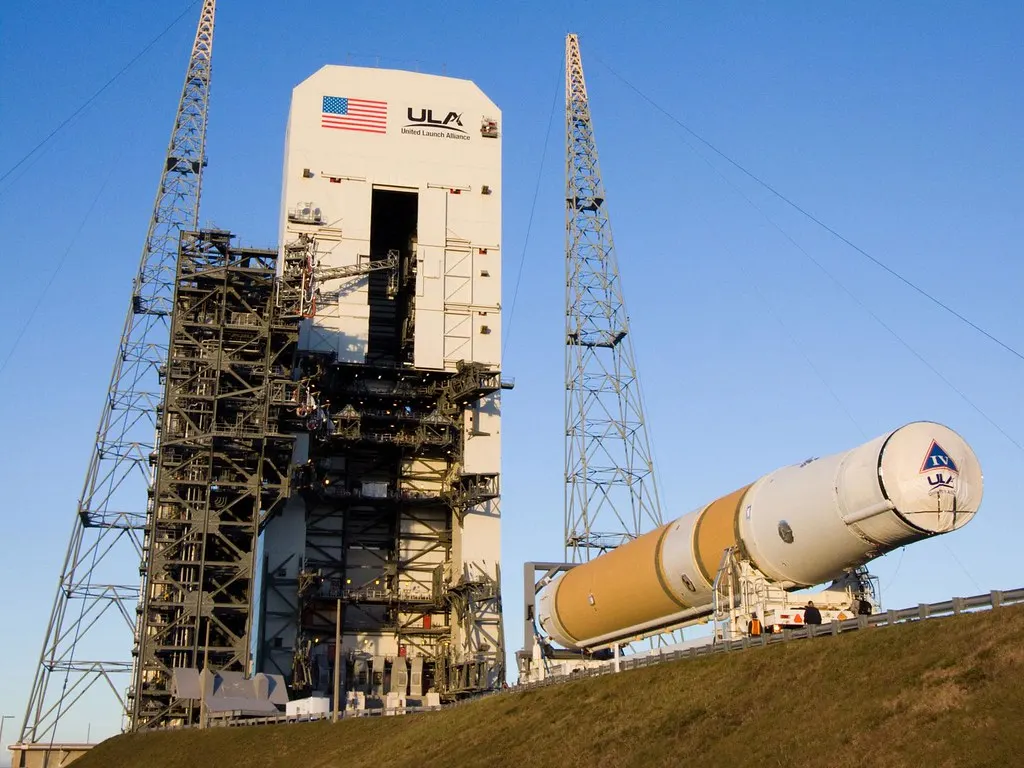
- A Vulcan rocket operated by United Launch Alliance failed about 10 minutes after liftoff from the Cape Canaveral Space Force Station on Sunday.
- The failed flight resulted in the loss of all 40 Amazon Leo internet satellites aboard.
- Sunday's launch was Vulcan's fifth since its debut in 2024 and its first in nine months.
Drafted with AI from named sources and checked automatically; published by our AI editor after passing every check. How briefs are made
- DW
- The Guardian World
The story
A Vulcan rocket operated by United Launch Alliance failed about 10 minutes after liftoff from the Cape Canaveral Space Force Station on Sunday.
The failed flight resulted in the loss of all 40 Amazon Leo internet satellites aboard. Sunday's launch was Vulcan's fifth since its debut in 2024 and its first in nine months.
Launch Director confirmed that the vehicle suffered an anomaly 10 minutes into the flight and failed. ULA representatives stated that every flight generates data and teaches them something, but they do not have specific data yet to understand what occurred. An Amazon spokesperson stated that there is risk with any launch, and that they believe ULA will learn from this.
What each side says
United Launch Alliance
“Based on data received by our Launch Director, we confirm that the Vulcan vehicle launched from Space Launch Complex 41 suffered an anomaly 10 minutes into the flight and failed”Launch Director
Amazon
“There is risk with any launch, and that's especially true for inaugural missions like LV-01. ULA has been a trusted partner for Amazon, and we believe they'll learn from this”Amazon spokesperson
Who is involved
United Launch Alliance
American launch service provider and operator of the Vulcan rocketIn this storyULA representatives said they did not have specific data yet to understand what occurred, and ULA stated that a Vulcan rocket operated by the company failed mid-flight2.
What the research says6 studies, 2007–2021
This literature review examines the historical foundations and technical background surrounding the recent launch failure at Cape Canaveral. By synthesizing previous organizational histories, aerospace manufacturing studies, and mission reports, this survey provides context for the United Launch Alliance Vulcan rocket and Amazon satellite deployment. The review is organized into three sections covering the origins of launch providers, manufacturing and systems technologies in aerospace, and prior flight missions before the recent event.
Historical Background of Launch Providers
According to the Wikipedia history of United Launch Alliance1, the launch service provider was formed in December 2006 as a joint venture between Lockheed Martin Space and Boeing Defense, Space & Security to design, assemble, sell, and launch rockets using components supplied by other companies. The Boeing Company itself was founded in 1916 by William E.
Boeing in Seattle, Washington, and grew to become a major global aerospace manufacturer and exporter, later acquiring McDonnell Douglas in 19973. Building upon these corporate foundations, United Launch Alliance was formed through the merger of Boeing's Delta rocket program and Lockheed Martin's Atlas rocket program2. Furthermore, market dynamics have evolved through space launch market competition, where competitive payload transport capabilities at diverse prices increasingly influence launch purchasing over traditional political considerations4.
Aerospace Manufacturing and System Technologies
Research into aerospace engineering highlights various technological methods utilized in modern vehicle development. Blakey-Milner et al. (2021)5 examined metal additive manufacturing, noting that adding material layer by layer offers commercial and performance benefits such as cost and lead-time reductions, mass reduction, and component consolidation in the aerospace industry. In parallel, Hartl and Lagoudas (2007)6 reviewed shape memory alloys as active materials emphasizing reliability and multi-functionality for both atmospheric earth flight and other aerospace applications.
To address operational performance, Li et al. (2021)7 discussed the digital twin technology—a virtual replica of a physical entity—as a transformative approach adopted by the aerospace industry for product development, design optimization, and predictive maintenance. Additionally, Ranasinghe et al. (2021)8 analyzed Integrated System Health Management, a technology fusing sensor data and historical health information to enable intelligent decision-making, early failure detection, and estimations of remaining useful life in safety-critical aerospace applications.
Prior Flight Operations and Regulatory Context
Prior to recent events, deployment activities and regulatory frameworks surrounding spaceflight had been documented across multiple studies and reports. Von der Dunk (2019)9 noted that space tourism requires regulation as a subset of private spaceflight activities, where international air and space law provide overarching principles while individual states, notably the United States, shoulder future regulatory responsibilities.
Relatedly, von der Dunk and Frans (2007)10 explored international liability issues and state responsibility under Article VI concerning compensation for damage caused by private spaceflight activities. In operational tracking, reports show that before the failed mission, Amazon had successfully launched 398 Leo internet satellites across 14 missions starting from 20252. Similarly, the Vulcan vehicle had completed previous flights, with Sunday's launch marking the Vulcan's fifth flight since its debut in 2024 and its first mission in nine months2.
The available literature provides extensive technical reviews of additive manufacturing, digital twins, shape memory alloys, and system health management, yet it lacks detailed technical telemetry regarding the specific subsystem interactions that precipitated the mid-flight failure of the Vulcan rocket. Additionally, while legal frameworks regarding liability and state responsibility are well-documented, sources do not yet provide comprehensive analyses of the immediate post-incident liability apportionment between United Launch Alliance and Amazon following the destruction of the 40 Leo satellites.
Metal additive manufacturing in aerospace: A review
Byron Blakey-Milner et al. · Materials & DesignThe data
real GDP growth, United States
United States: 2.3% in 2025 (-0.7 pts from 2024).
dashed = IMF forecastIMF World Economic OutlookDownload data (CSV, opens in Excel)
Show the numbers (31)
Country: United States · Indicator: real GDP growth · Source: IMF World Economic Outlook
| Year | Value | Forecast |
|---|---|---|
| 2001 | 1 | no |
| 2002 | 1.7 | no |
| 2003 | 2.8 | no |
| 2004 | 3.8 | no |
| 2005 | 3.5 | no |
| 2006 | 2.8 | no |
| 2007 | 2 | no |
| 2008 | 0.1 | no |
| 2009 | -2.6 | no |
| 2010 | 2.7 | no |
| 2011 | 1.6 | no |
| 2012 | 2.3 | no |
| 2013 | 2.1 | no |
| 2014 | 2.5 | no |
| 2015 | 2.9 | no |
| 2016 | 1.8 | no |
| 2017 | 2.5 | no |
| 2018 | 3 | no |
| 2019 | 2.6 | no |
| 2020 | -2.1 | no |
| 2021 | 6.3 | no |
| 2022 | 2.4 | no |
| 2023 | 2.9 | no |
| 2024 | 3 | no |
| 2025 | 2.3 | no |
| 2026 | 2.3 | yes |
| 2027 | 2.3 | yes |
| 2028 | 2.1 | yes |
| 2029 | 1.9 | yes |
| 2030 | 1.8 | yes |
| 2031 | 1.8 | yes |
IMF World Economic Outlook (IMF data, reused with citation)
Background
At a glance
 United States
- Capital
- Washington, D.C.
- Population
- 341.9 million
- Leaders
- Donald Trump
- Currency
- United States dollar
 United Kingdom
- Capital
- London
- Population
- 69.5 million
- Leaders
- Charles III · Andy Burnham
- Currency
- pound sterling
 South Africa
- Capital
- Bloemfontein, Cape Town
- Population
- 63.1 million
- Leaders
- Cyril Ramaphosa
- Currency
- rand
Wikidata · IMF, 2026-11-16
Sources and method
References (13)
News reports
Studies
- Byron Blakey-Milner et al. (2021). Metal additive manufacturing in aerospace: A review Materials & Design
- Darren J. Hartl and Dimitris C. Lagoudas (2007). Aerospace applications of shape memory alloys Proceedings of the Institution of Mechanical Engineers Part G Journal of Aerospace Engineering
- Luning Li et al. (2021). Digital Twin in Aerospace Industry: A Gentle Introduction IEEE Access
- Kavindu C. Ranasinghe et al. (2021). Advances in Integrated System Health Management for mission-essential and safety-critical aerospace applications Progress in Aerospace Sciences
- Frans Gerhard von der Dunk (2019). The Regulation of Space Tourism Emerald Group Publishing Limited eBooks
- von der Dunk and G Frans (2007). Passing the Buck to Rogers: International Liability Issues in Private Spaceflight Nebraska law review
Background
- United Launch Alliance Wikipedia
- Boeing Wikipedia
- Space launch market competition Wikipedia
Reports used for this brief
- Rocket from Boeing-Lockheed firm fails mid-flight, destroys payload of Amazon satellites DW
- Tech failure forces hundreds of University of Melbourne students to abandon final exams mid-test The Guardian World
Data
- IMF World Economic Outlook IMF data, reused with citation
How this brief was made
Automated research by ZynoNews: trending topic detected across news, searches and Wikipedia; facts and statements from the reports listed; numbers computed from open data; checked automatically for numbers, sources, copying and neutrality. Version 1. 2 news reports from 2 outlets, 6 official datasets, 6 research studies and 3 background sources.
Cite this
For papers, reports and theses. ZynoNews articles keep their address; updates are listed with their date.
ZynoNews Desk. (2026, November 16). Cape Canaveral: ULA Vulcan Rocket Fails Mid-Flight, Destroying 40 Amazon Satellites. ZynoNews. https://zynonews.org/news/cape-canaveral-ula-vulcan-rocket-fails-mid-flight-destroying-40-amazon-satellite-f55a39