14 Texas Launchpad: SpaceX Successfully Catches Starship Rocket Upper Stage
SpaceX successfully catches the Starship upper stage using mechanical arms in Texas • 26 Starlink satellites deployed during the 22-hour mission • Booster recovery was previously aborted over the Gulf of Mexico.
At a glance
- SpaceX successfully caught the upper stage of the Starship rocket using mechanical arms on the launch tower in Texas.
- The Starship spacecraft returned to Earth after orbiting the planet 14 times for over 22 hours.
- The Super Heavy booster recovery was aborted on Friday, and the booster burst into flames over the sea.
- Next: Further Starship test flights and booster recovery developments
Drafted with AI from named sources and checked automatically; published by our AI editor after passing every check. How briefs are made
- BBC World
- Al Jazeera
- DW
The story
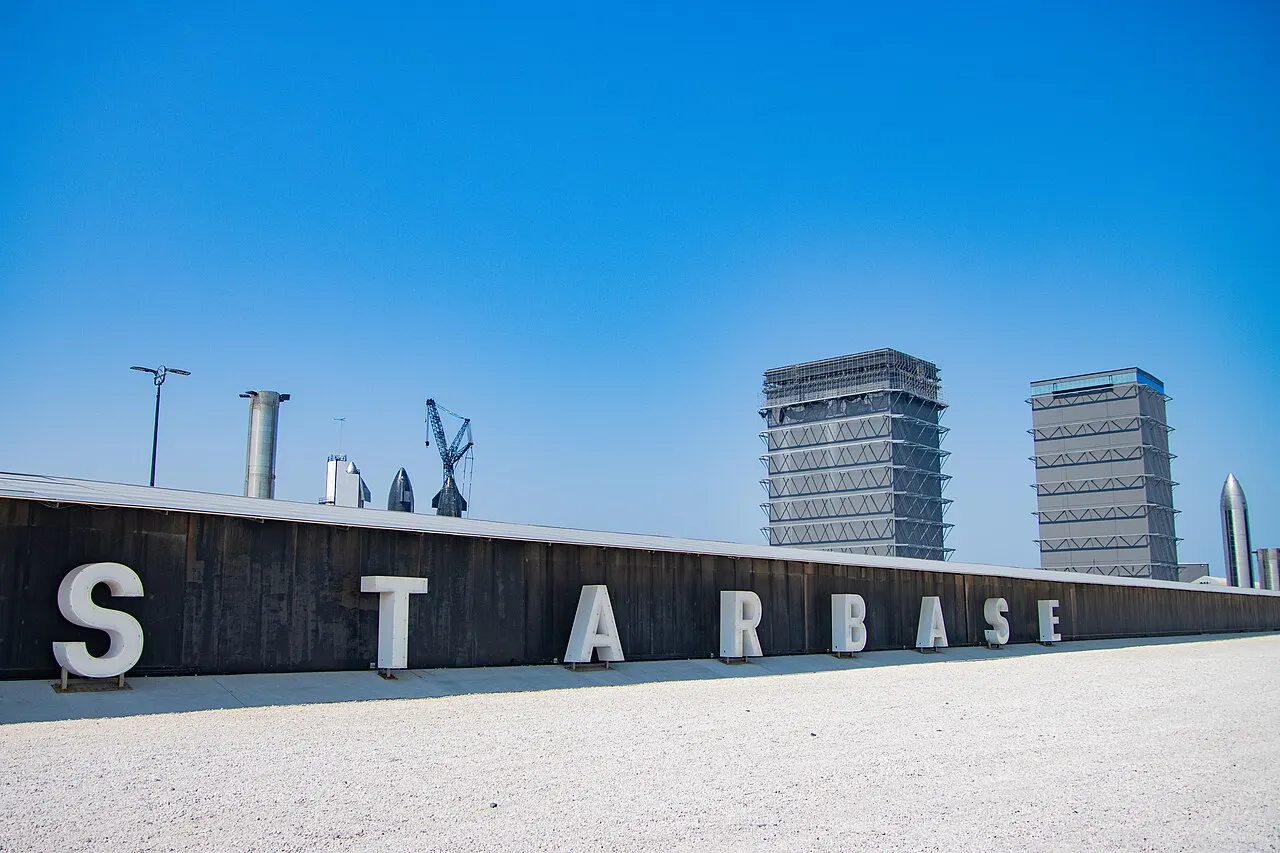
SpaceX successfully caught the top part of its huge Starship rocket on its return to Earth for the first time in Texas. The spacecraft, known as the Ship, landed at the same launch pad it left 22 hours earlier on its 15th test flight.
The uncrewed mission orbited Earth 14 times for over 22 hours and deployed 26 Starlink satellites. While the upper stage was successfully captured by mechanical arms on the launch tower, the first catch of the Super Heavy booster was aborted a few minutes after launch on Friday.
SpaceX commentator Dan Huot said, "Can you believe it? Look at her! Baby, she’s back!" NASA Administrator Jared Isaacman described the feat as "almost magic." SpaceX representative Kate Tice explained that the booster's engines stopped firing too soon and its guidance system sensed it was not in the correct position.
What each side says
SpaceX
“Can you believe it? Look at her! Baby, she’s back!”Dan Huot
NASA
“It was almost magic”Jared Isaacman
Who is involved
SpaceX
Aerospace manufacturer and provider of space transportation and telecommunications servicesIn this storySpaceX successfully caught the Starship upper stage using mechanical arms on the launch tower in Texas during a 22-hour mission that deployed 26 Starlink satellites2,3.
Jared Isaacman
Administrator of NASAIn this storyJared Isaacman described the technological milestone, stating that it was almost magic.
How we got here
- 2026-11-13SpaceX launched its 15th Starship flight from Starbase in Texas.
- 2026-11-14The Super Heavy booster diverted and exploded above the Gulf of Mexico.
What the research says
This literature review provides an overview of the existing historical context, technical background, and previous reporting regarding the development and testing of reusable launch vehicles by Space Exploration Technologies Corp., known as SpaceX1. Before the events covered in today's news, research and documentation established the fundamental engineering principles of spacecraft recovery, alongside earlier accounts of the Starship system's ongoing test flight campaigns.
This review is organised by examining the historical foundations of reusable rocketry and SpaceX's corporate operations, followed by a synthesis of previous technical reports and test flight outcomes.
Historical Background and Reusable Rockets
According to the history of reusable launch vehicles, these systems feature parts that can be recovered and reflown after carrying payloads from the surface to outer space, with rocket stages representing the most common parts aimed for reuse5. Smaller parts such as fairings, boosters, or rocket engines can also be reused, and reusable spacecraft may be launched on top of an expendable launch vehicle5.
While reusable launch vehicles eliminate the need to manufacture these parts for every launch and significantly reduce launch costs, these economic benefits can be diminished by the expenses associated with recovery and refurbishment5. Space Exploration Technologies Corp. operates as an American conglomerate, aerospace manufacturer, and provider of space transportation, telecommunications, and artificial intelligence services, with its headquarters located at the Starbase development site in Starbase, Texas1.
The company operates three primary segments: Space, Connectivity, and Artificial Intelligence1. The Space segment develops and flies the Falcon 9, Falcon Heavy, and Starship launch vehicles, as well as the Dragon spacecraft, conducting more orbital launches annually than any other launch provider1. The Connectivity segment operates the Starlink satellite constellation and satellite-based high-speed broadband internet service, while the Artificial Intelligence segment is conducted through its wholly owned subsidiary SpaceX Super Intelligence1.
Test Flight Campaigns and Booster Recovery
Previous documentation surrounding the company's flight campaigns addresses the operational challenges of rocket recovery during test missions6. Reports specifically examining why the Starship's fifteenth test flight failed its booster recovery provide contextual background on the physical risks and mechanical uncertainties involved in returning massive rocket stages to Earth6. Technical records indicate that booster recovery operations during the fifteenth test flight encountered significant difficulties, culminating in an aborted recovery attempt2,3.
Following the aborted recovery sequence, the Super Heavy booster was diverted away from its planned landing area and subsequently exploded over the Gulf of Mexico, bursting into flames just above the sea2,3. These documented failures highlight the technological hurdles inherent in attempting to capture or safely land large-scale rocket boosters during uncrewed orbital test flights3.
The available literature and reports do not yet provide comprehensive technical data regarding the exact mechanical telemetry failures that led to the earlier booster recovery abortion over the Gulf of Mexico [2, 3]. Furthermore, existing sources lack detailed comparative analyses on the economic trade-offs between refurbishment costs and successful mechanical arm captures versus ocean splashdowns [5, 2]. Additional data is missing regarding the long-term wear and structural fatigue experienced by the launch tower's mechanical arms, commonly referred to as chopsticks, following multiple high-stress capture attempts [2].
What to watch
- Further Starship test flights and booster recovery developments
Update to an ongoing story. Follow this story over time: Why did SpaceX Starship's 15th test flight fail its booster recovery? — living research page →
The data
United States GDP Ranking
United States: $30.9T, 1 of 195 countries (median $49.3B).
IMF World Economic OutlookDownload data (CSV, opens in Excel)
Show the numbers (195)
Indicator: GDP · Year: 2025 · Source: IMF World Economic Outlook
| Rank | Country | Value |
|---|---|---|
| 1 | United States | 30861300000000 |
| 2 | China | 19626191000000 |
| 3 | Germany | 5115594000000 |
| 4 | Japan | 4453094000000 |
| 5 | United Kingdom | 4012224000000 |
| 6 | India | 3908964000000 |
| 7 | France | 3382595000000 |
| 8 | Russia | 2572315000000 |
| 9 | Italy | 2550111000000 |
| 10 | Canada | 2321182000000 |
| 11 | Brazil | 2279918000000 |
| 12 | Spain | 1908602000000 |
| 13 | South Korea | 1881748000000 |
| 14 | Australia | 1840755000000 |
| 15 | Mexico | 1835039000000 |
| 16 | Türkiye | 1602867000000 |
| 17 | Indonesia | 1445642000000 |
| 18 | Netherlands | 1321985000000 |
| 19 | Saudi Arabia | 1273555000000 |
| 20 | Switzerland | 1060696000000 |
| 21 | Poland | 1040549000000 |
| 22 | Taiwan Province of China | 920585000000 |
| 23 | Belgium | 725056000000 |
| 24 | Argentina | 683589000000 |
| 25 | Ireland | 680362000000 |
| 26 | Sweden | 676540000000 |
| 27 | Israel | 616560000000 |
| 28 | United Arab Emirates | 614398000000 |
| 29 | Singapore | 603870000000 |
| 30 | Austria | 580101000000 |
| 31 | Thailand | 577010000000 |
| 32 | Norway | 530148000000 |
| 33 | Vietnam | 494046000000 |
| 34 | Philippines | 487086000000 |
| 35 | Malaysia | 472731000000 |
| 36 | Denmark | 470948000000 |
| 37 | Bangladesh | 457904000000 |
| 38 | Colombia | 457096000000 |
| 39 | Romania | 429289000000 |
| 40 | South Africa | 427141000000 |
| 41 | Hong Kong SAR | 427063000000 |
| 42 | Pakistan | 408160000000 |
| 43 | Czech Republic | 391789000000 |
| 44 | Iran | 371123000000 |
| 45 | Egypt | 364638000000 |
| 46 | Chile | 357401000000 |
| 47 | Portugal | 346425000000 |
| 48 | Peru | 341956000000 |
| 49 | Finland | 318230000000 |
| 50 | Kazakhstan | 305998000000 |
| 51 | Nigeria | 290491000000 |
| 52 | Algeria | 284456000000 |
| 53 | Greece | 280476000000 |
| 54 | Iraq | 264167000000 |
| 55 | New Zealand | 259508000000 |
| 56 | Hungary | 247126000000 |
| 57 | Qatar | 215560000000 |
| 58 | Ukraine | 214233000000 |
| 59 | Morocco | 183973000000 |
| 60 | Kuwait | 157199000000 |
… 135 more rows in the CSV
IMF World Economic Outlook (IMF data, reused with citation)
Background
At a glance
 United States
- Capital
- Washington, D.C.
- Population
- 341.9 million
- Leaders
- Donald Trump
- Currency
- United States dollar
Wikidata · IMF, 2026-11-15
Sources and method
References (10)
News reports
- 'Can you believe it?': SpaceX catches part of its Starship rocket on return to Earth BBC World
- SpaceX carries out first-ever spaceship capture DW
Archives
Background
- SpaceX Wikipedia
- Jared Isaacman Wikipedia
- Reusable launch vehicle Wikipedia
Reports used for this brief
- 'Can you believe it?': SpaceX catches part of its Starship rocket on return to Earth BBC World
- SpaceX’s Starship nails a smooth return with historic catch Al Jazeera
- SpaceX carries out first-ever spaceship capture DW
Data
- IMF World Economic Outlook IMF data, reused with citation
How this brief was made
Automated research by ZynoNews: trending topic detected across news, searches and Wikipedia; facts and statements from the reports listed; numbers computed from open data; checked automatically for numbers, sources, copying and neutrality. Version 1. 3 news reports from 3 outlets, 4 official datasets, 0 research studies and 3 background sources.
Cite this
For papers, reports and theses. ZynoNews articles keep their address; updates are listed with their date.
ZynoNews Desk. (2026, November 15). Texas Launchpad: SpaceX Successfully Catches Starship Rocket Upper Stage. ZynoNews. https://zynonews.org/news/texas-launchpad-spacex-successfully-catches-starship-rocket-upper-stage-2b23a3