15th Why did SpaceX Starship's 15th test flight fail its booster recovery?
SpaceX launched its 15th Starship flight from Texas on November 13, 2026, reaching orbit and deploying 26 satellites • The Super Heavy booster diverted and exploded above the Gulf of Mexico instead of returning to the pad • SpaceX states safety is the priority while testing new capabilities.
At a glance
- SpaceX successfully launched its 15th Starship flight from Starbase in Texas on November 13, 2026.
- The Super Heavy booster diverted from its flight path and exploded above the Gulf of Mexico instead of returning to the launch pad.
- The Starship upper stage reached orbit about 27 minutes after launch and deployed 26 Starlink satellites.
- Next: Further investigation by SpaceX into the booster diversion and explosion over the Gulf of Mexico.
Drafted with AI from named sources and checked automatically; published by our AI editor after passing every check. How briefs are made
- France 24
- TBS News
- BBC World
- DW
- fox26houston.com
- winnipegfreepress.com
The story
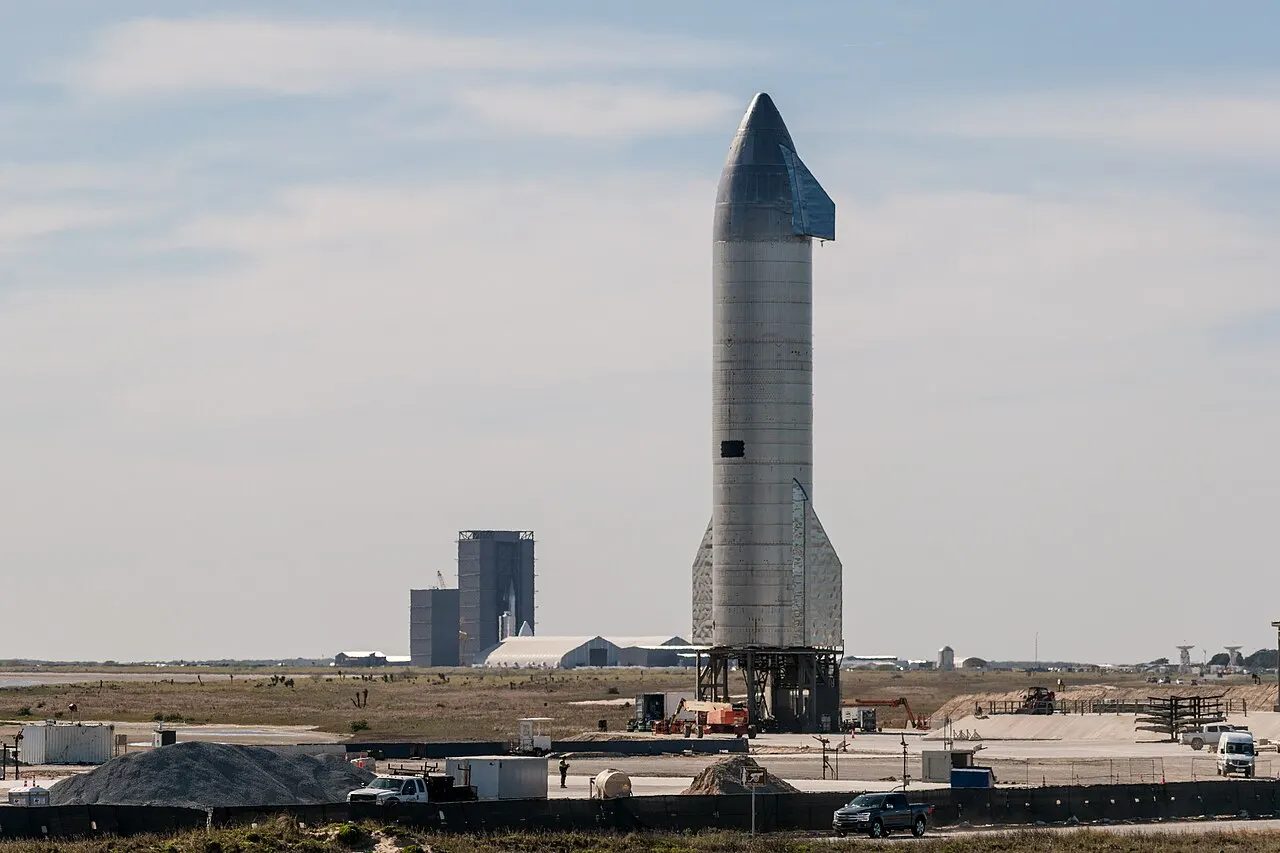
SpaceX successfully launched its 15th Starship flight from Starbase in Texas on November 13, 2026. The 124-meter vehicle reached orbit about 27 minutes after launch and deployed 26 Starlink satellites. However, the Super Heavy booster diverted from its flight path and exploded above the Gulf of Mexico instead of returning to the launch pad.
NASA has helped fund Starship's development with roughly $3.2 billion since 2021, while SpaceX has invested at least $15 billion. The vehicle stands 40 stories tall and represents a major step toward full reusability in space transport.
An unspecified SpaceX spokesperson stated that safety is the number one priority while testing new things on these vehicles. Dan Huot, a SpaceX representative, noted they were not sure right now why they were not able to bring the booster back. Meanwhile, Prof Malcolm Macdonald, President of the Royal Aeronautical Society, stated that full reusability has the potential to fundamentally change the economics of accessing space.
What each side says
SpaceX
“Safety is always the number one priority and we're still testing out things that we haven't done before on these vehicles, and so we are prioritising making sure that we”Unspecified SpaceX spokesperson
Analysts
“Full reusability has the potential to fundamentally change the economics of accessing space. One successful flight will not prove that model, but it could mark an important transition: from demonstrating”Prof Malcolm Macdonald
Who is involved
SpaceX
American aerospace manufacturer and provider of space transportation and telecommunicationsIn this storySpaceX stated that safety is the number one priority while testing new capabilities after its 15th Starship flight experienced a booster explosion.
How we got here
- 2026-11-13SpaceX launched its 15th Starship flight from Starbase in Texas.
What the research says5 studies, 2007–2025
This literature review provides an overview of the research and historical background regarding reusable launch vehicles and aerospace manufacturing preceding the 15th test flight of the SpaceX Starship vehicle. As space agencies and private entities pursue full and rapid reusability to reduce mission costs, researchers have focused on aerodynamics, descent controls, environmental impacts, and communication phenomena.
This survey synthesizes foundational industrial developments, wind tunnel testing, and life cycle assessments, structuring the material from historical context to specific technical themes.
Historical Background of SpaceX
According to the history of SpaceX1, the company was founded as an American aerospace manufacturer and space transportation provider headquartered in Starbase, Texas, operating primary segments that include space launch vehicles, the Starlink satellite constellation, and artificial intelligence development. Building upon this organizational foundation, SpaceX has privately funded the development of orbital launch systems designed to be reused many times, with long-term objectives aimed at returning launch vehicle first stages to launch sites within minutes, as detailed in the history of the SpaceX reusable launch system development program2.
Complementing these private initiatives, the United States federal republic encompasses 50 states and various territories, representing a major geographic and administrative area for aerospace operations3. Furthermore, historical reports indicate that NASA has contributed funding toward Starship's development, while SpaceX has invested significant private capital4.
Vehicle Recovery and Descent Technologies
Research into the descent and recovery of reusable launch vehicles emphasizes the aerodynamic and mechanical systems required for precise landings. Marwege et al. (2022)5 conducted wind tunnel tests in the Hypersonic Wind Tunnel Cologne to assess the aerodynamic properties of vehicles utilizing retro propulsion during atmospheric reentry and landing phases. Expanding upon guidance integration, De Oliveira and Lavagna (2023)6 introduced a descent dynamics simulator utilizing closed-loop guidance and control, where a first-stage booster is steered by a Thrust Vector Control system and planar fins using proportional-integral-derivative controllers to correct trajectory deviations.
While Marwege et al. (2022)5 focused on aerodynamic properties across hypersonic and supersonic flow conditions, De Oliveira and Lavagna (2023)6 integrated environmental and aerodynamic models into a real-time successive convex optimization algorithm for precise landing assessments.
Environmental and Communication Factors
Studies evaluating the broader operational impacts of reusable launch vehicles examine both atmospheric effects and communication challenges during flight. Hartunian et al. (2007)7 assessed radio frequency blackout phenomena caused by plasma generation around vehicles during high-altitude reentry, evaluating frequency band selections for continuous communication. In contrast, Dominguez Calabuig et al. (2024)8 utilized a space-specific life cycle assessment approach to evaluate the environmental footprint of reusable launch vehicle fleets, noting that increased launch frequencies could amplify climate impacts.
Additionally, Revell et al. (2025)9 examined how rocket emissions can thin the stratospheric ozone layer under different launch scenarios, identifying chlorine and black carbon as primary drivers of ozone depletion. While Hartunian et al. (2007)7 concentrated on immediate vehicle telemetry and communication constraints during reentry, Dominguez Calabuig et al. (2024)8 and Revell et al.
(2025)9 analyzed long-term atmospheric and environmental consequences associated with scaling launch frequencies.
The reviewed literature does not yet show definitive consensus on the optimal balance between the economic benefits of rapid rocket reusability and the environmental degradation caused by exhaust emissions at high launch frequencies. While sources discuss aerodynamic descent controls and radio frequency blackouts during reentry, specific performance metrics regarding booster recovery failures during active test flights remain undocumented in the formal studies. Furthermore, data comparing the long-term reliability of different retro propulsion methods across varying atmospheric conditions is largely missing from the current empirical record.
Near-future rocket launches could slow ozone recovery
Laura E. Revell et al. · npj Climate and Atmospheric ScienceWhat to watch
- Further investigation by SpaceX into the booster diversion and explosion over the Gulf of Mexico.
- Future test flights and booster recovery attempts by SpaceX.
How the world is covering it
5 reports from 3 countries in 1 languages in the last three days.
Coverage data: GDELT Project
Background
At a glance
 United States
- Capital
- Washington, D.C.
- Population
- 341.9 million
- Leaders
- Donald Trump
- Currency
- United States dollar
Wikidata · IMF, 2026-11-14
Sources and method
References (16)
News reports
Studies
- Ansgar Marwege et al. (2022). Hypersonic retro propulsion for reusable launch vehicles tested in the H2K wind tunnel CEAS Space Journal
- Alice De Oliveira and Michèle Roberta Lavagna (2023). Development of a Controlled Dynamics Simulator for Reusable Launcher Descent and Precise Landing Aerospace
- R. A. Hartunian et al. (2007). Causes and mitigation of radio frequency (RF) blackout during reentry of reusable launch vehicles ROSA P
- Guillermo J. Dominguez Calabuig et al. (2024). Environmental life cycle assessment of reusable launch vehicle fleets: Large climate impact driven by rocket exhaust emissions Acta Astronautica
- Laura E. Revell et al. (2025). Near-future rocket launches could slow ozone recovery npj Climate and Atmospheric Science
Background
- SpaceX Wikipedia
- SpaceX reusable launch system development program Wikipedia
- United States Wikipedia
Reports used for this brief
- SpaceX's Starship encounters problems during 15th test flight France 24
- SpaceX launches 15th Starship flight, aims for first round trip TBS News
- Setback for SpaceX Starship rocket's double-catch test BBC World
- SpaceX launches Starship rocket, fails to recover booster DW
- SpaceX Starship Flight 15 from Texas set for Friday fox26houston.com
- SpaceX aims for first double catch of Starship in its most ambitious test flight yet – Winnipeg Free Press winnipegfreepress.com
Data
- IMF World Economic Outlook IMF data, reused with citation
How this brief was made
Automated research by ZynoNews: trending topic detected across news, searches and Wikipedia; facts and statements from the reports listed; numbers computed from open data; checked automatically for numbers, sources, copying and neutrality. Version 1. 6 news reports from 6 outlets, 3 official datasets, 5 research studies and 3 background sources.
Cite this
For papers, reports and theses. ZynoNews articles keep their address; updates are listed with their date.
ZynoNews Desk. (2026, November 14). Why did SpaceX Starship's 15th test flight fail its booster recovery?. ZynoNews. https://zynonews.org/news/why-did-spacex-starship-s-15th-test-flight-fail-its-booster-recovery-1fca18